
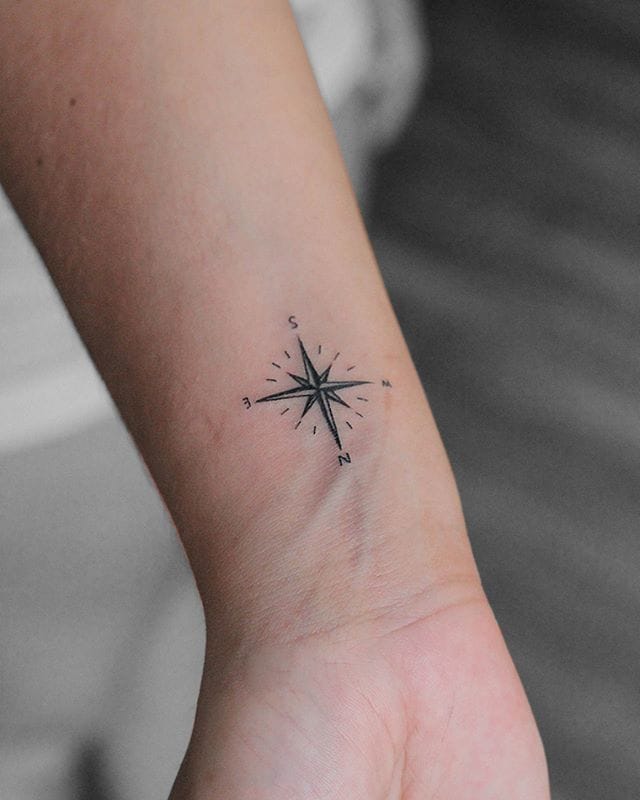
A compass tattoo can represent direction, travel, steadiness, or the search for a meaningful path. Those ideas are common interpretations rather than fixed definitions. A design may also mark a real journey, a family connection, a love of maps, or simply an interest in the compass as a precise graphic object.
This guide compares classic, modern, and combined compass designs, then explains how placement and scale affect readability. Use it to collect questions for your tattoo artist, not as a rulebook for what your tattoo must mean.
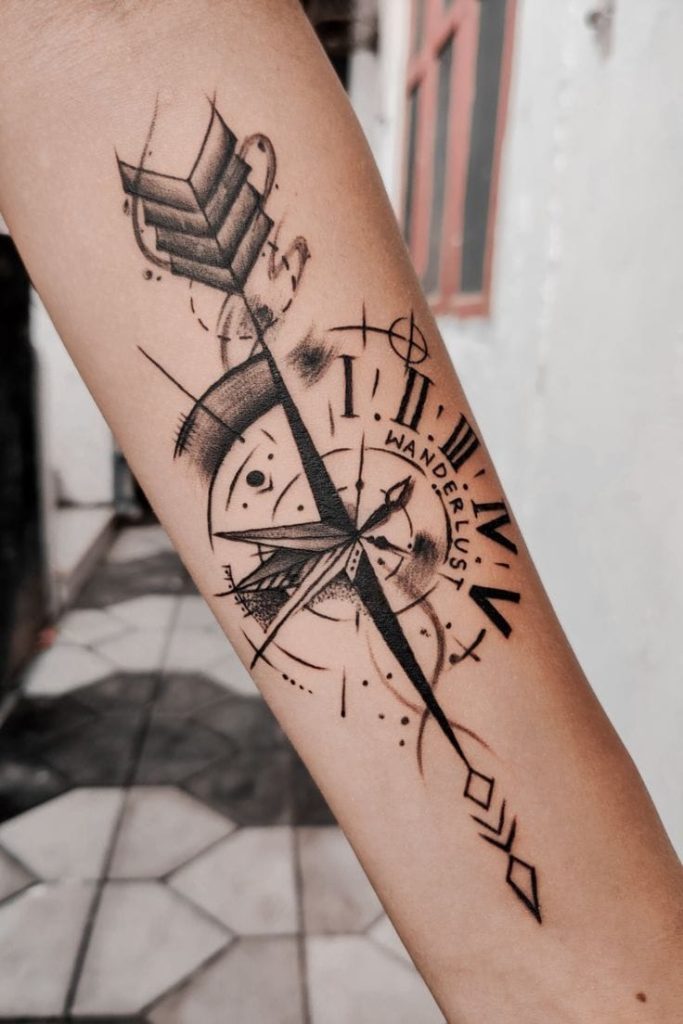
Compass Tattoo Meaning and History
Magnetic compasses became essential navigation instruments because they could indicate direction continuously. The Smithsonian’s Time and Navigation project notes that maritime compass use spread from China through the Islamic world and into Europe, where the instrument became central to dead reckoning. That practical history helps explain why modern wearers often connect compass tattoos with guidance, orientation, and finding a way forward.
A tattoo does not inherit one official meaning from the instrument. For one wearer, north may stand for home; for another, the needle may represent a goal, a person, or the decision to change course. Adding a date, coordinates, initials, or a landscape can make the personal reference clearer.
Classic and Nautical Compass Designs
Star Compass Tattoo
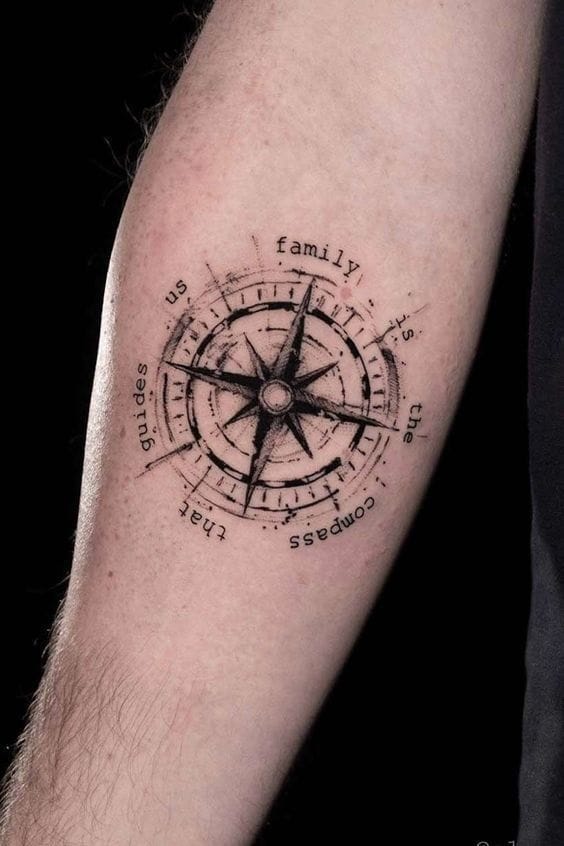
A star compass uses long points and strong symmetry, making it readable in both simple and detailed styles. The shape can suggest navigation or a chosen direction, but the exact message depends on the wearer. Black shading gives the points depth, while an outline version keeps the design light.
Nautical Compass Tattoo
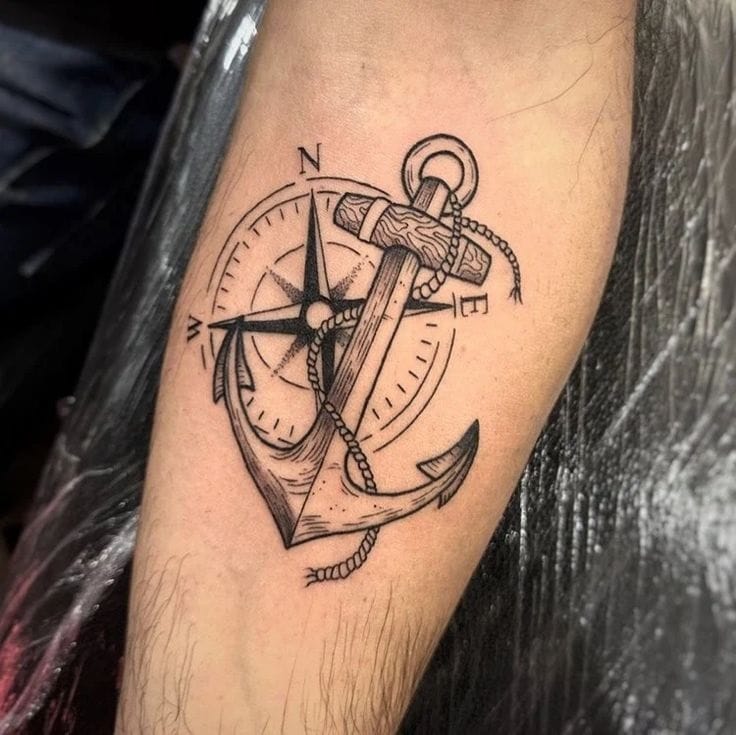
A nautical design may include a compass card, rope, waves, a ship, or cardinal letters. These details connect the tattoo visually with seafaring and long-distance travel. Choose only the elements that support your story; too many small nautical symbols can make a compact tattoo difficult to read.
Anchor and Compass Tattoo
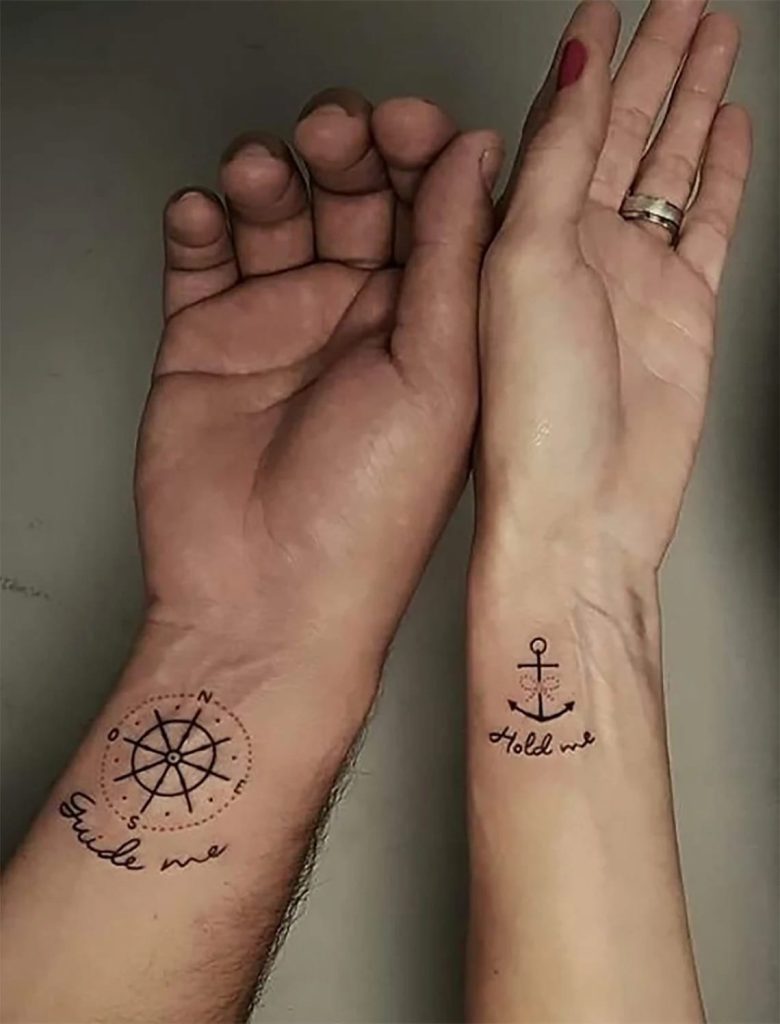
An anchor and compass create a useful contrast between staying grounded and moving forward. Some people use the combination for home and travel, stability and change, or a loved one who remains a point of reference. Initials can personalize the design, but they should be large enough to age clearly.
Compass Rose Tattoo
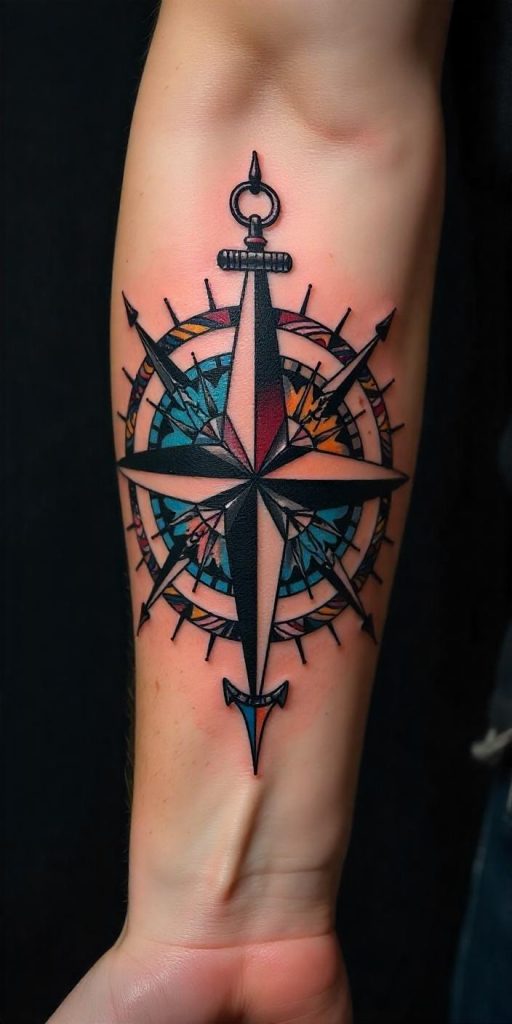
A compass rose can be paired with a botanical rose, though the two are different objects. The repeated word creates a visual idea: navigation beside a flower. A red rose may be personally associated with affection, while a black-and-gray flower can make the composition feel more restrained. No color carries one universal meaning.
Minimal, Geometric, and Contemporary Styles
Simple Compass Tattoo
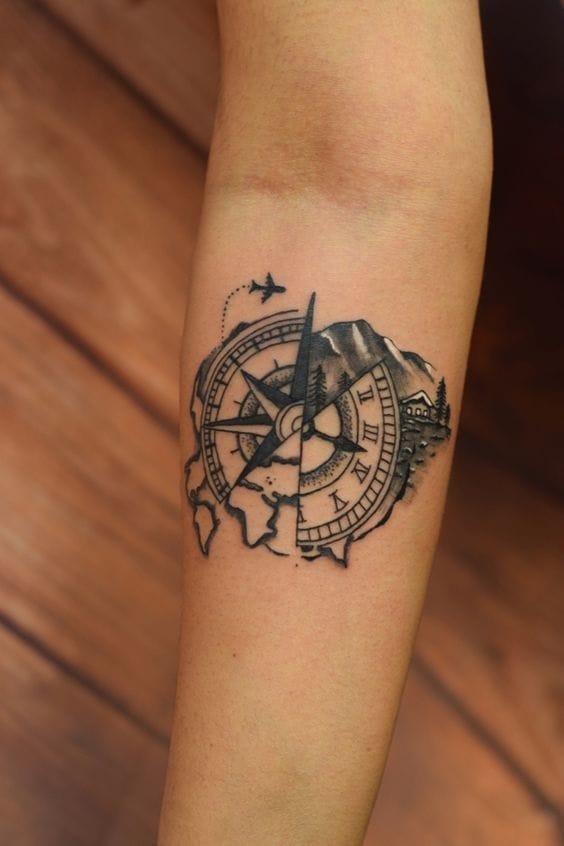
A simple compass may use two crossed lines, four cardinal points, and a small center. Minimal does not mean careless: spacing and line weight determine whether the design remains legible. Ask to see the stencil at actual size and remove any mark that does not contribute to the silhouette.
Small Compass Tattoo
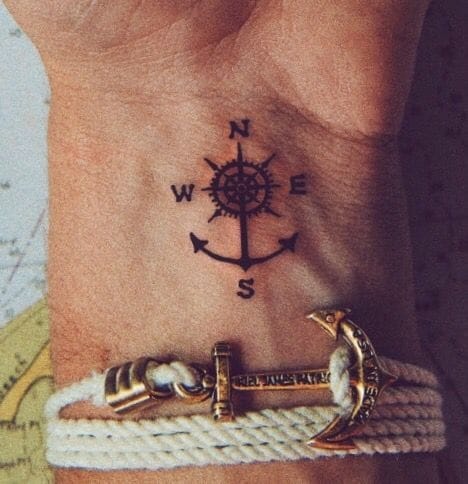
Small designs work best when the artist reduces the number of points, letters, and interior rings. The wrist, forearm, ankle, and upper arm can hold a compact compass, but the right size depends on the detail and placement. A tiny reference viewed on a phone may need to become larger on skin.
Geometric Compass Tattoo
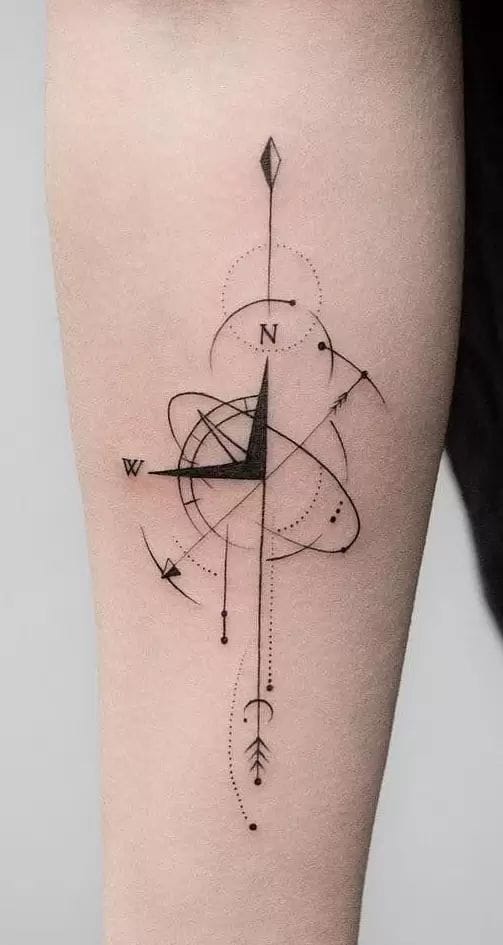
Geometric versions emphasize circles, triangles, dots, and construction lines. They can look technical or architectural without requiring a realistic instrument. Because small gaps may soften over time, the artist should decide how much negative space is needed between repeated lines.
Watercolor Compass Tattoo
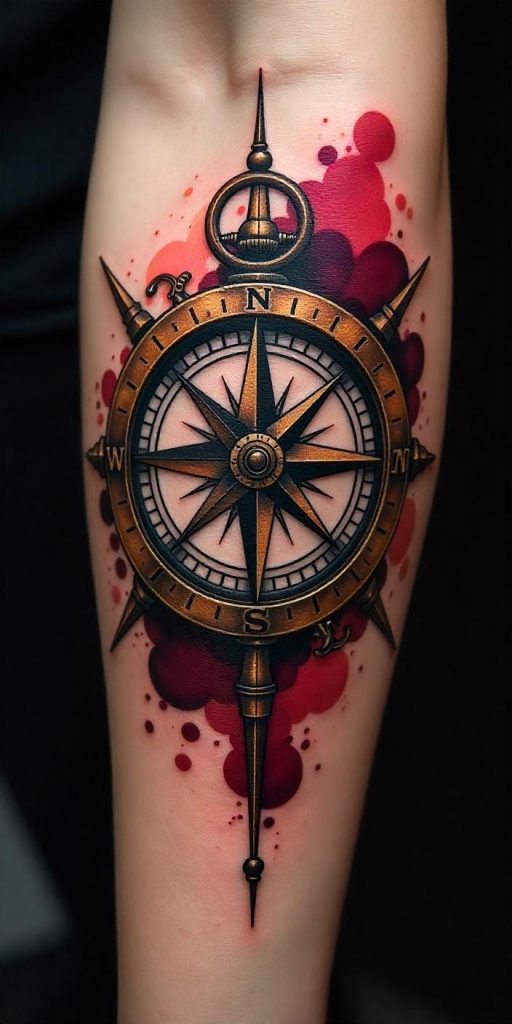
Watercolor-style tattoos use soft transitions, splashes, and areas of color beyond the outline. This is a visual technique, not a less painful category of tattoo. Session comfort depends on placement, duration, technique, and the individual. Choose an artist whose healed portfolio shows the kind of color work you want.
3D Compass Tattoo
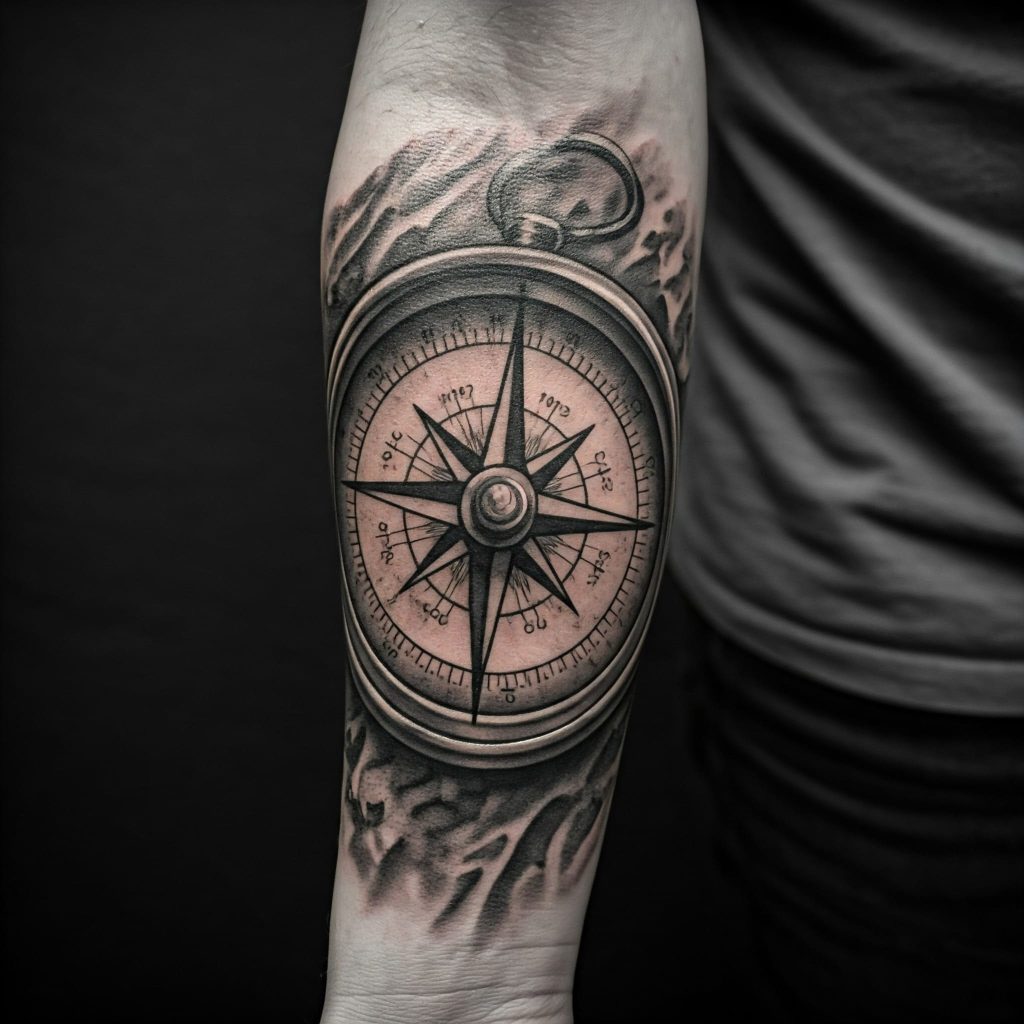
A 3D compass relies on perspective, highlights, and controlled shading to create depth. It usually needs more room than a flat icon so the needle, housing, and shadows remain distinct. Review healed examples from the artist, since a fresh photograph cannot show how the fine contrasts will settle.
Compass Tattoos Combined with Other Symbols
Compass and Clock Tattoo
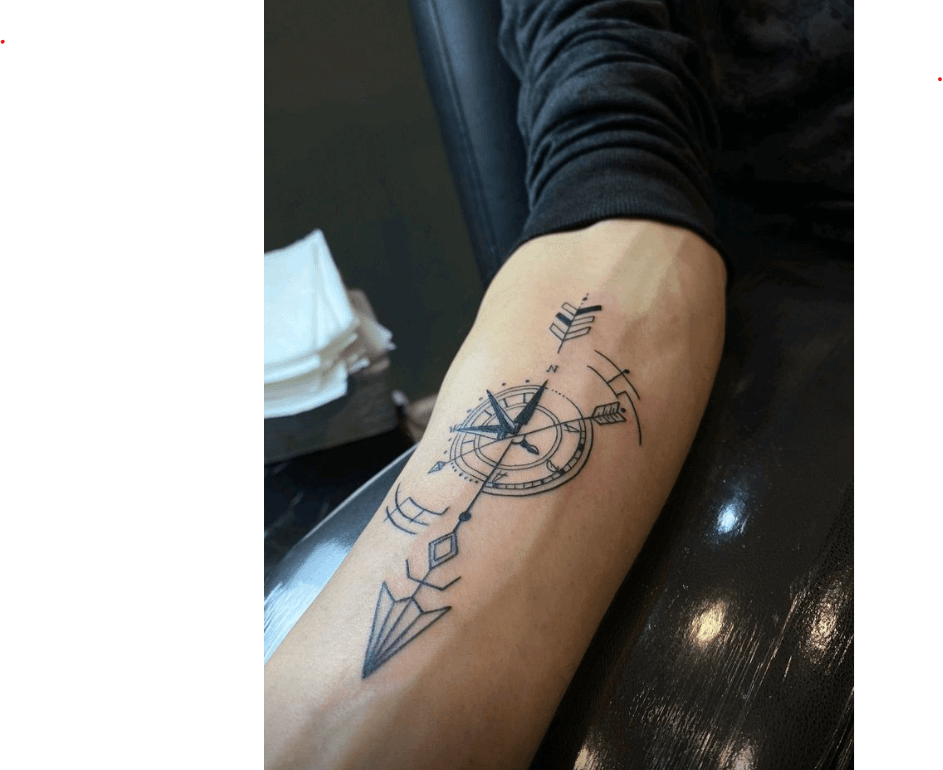
A clock can introduce a specific time, date, or awareness of change. Combined with a compass, it may represent where and when an important event happened, or simply bring two mechanical forms together. If the clock shows an exact time, verify the hands before approving the stencil.
Compass and Map Tattoo
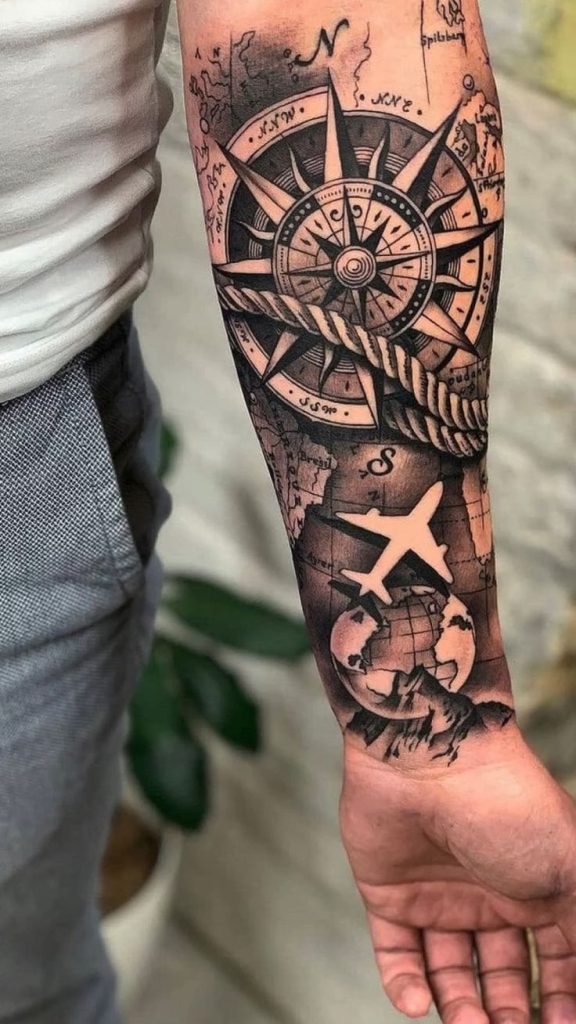
Maps, globes, and route lines suit a tattoo about a real trip or place. Coordinates can be more personal than a generic world map, but check every digit carefully. Detailed coastlines require enough size; at a small scale, a simplified route or mountain outline may remain clearer.
Compass and Crown Tattoo
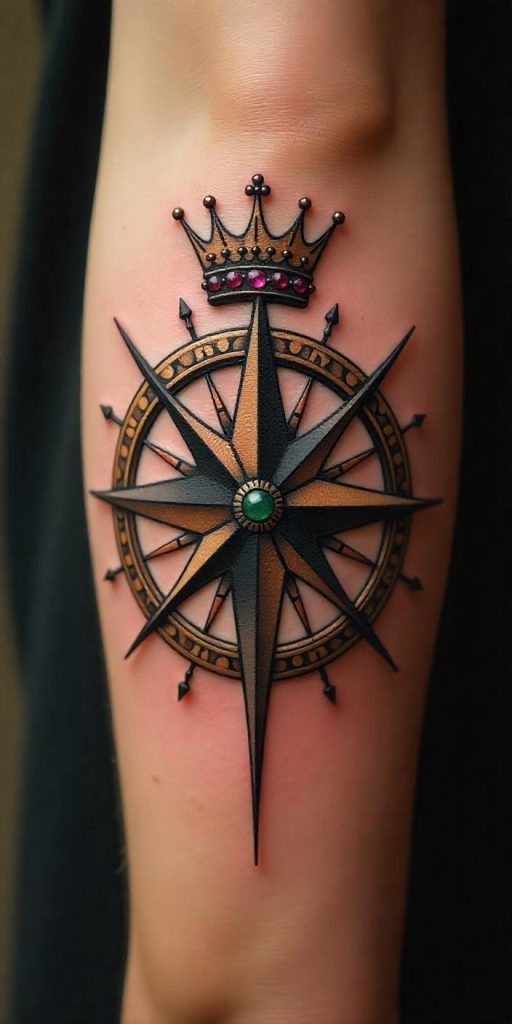
A crown can suggest responsibility, ambition, leadership, or nothing beyond a preferred decorative style. Pairing it with a compass may express taking responsibility for one’s direction. Keep the crown and cardinal points visually separate so neither shape disappears into the other.
Compass and Heart Tattoo
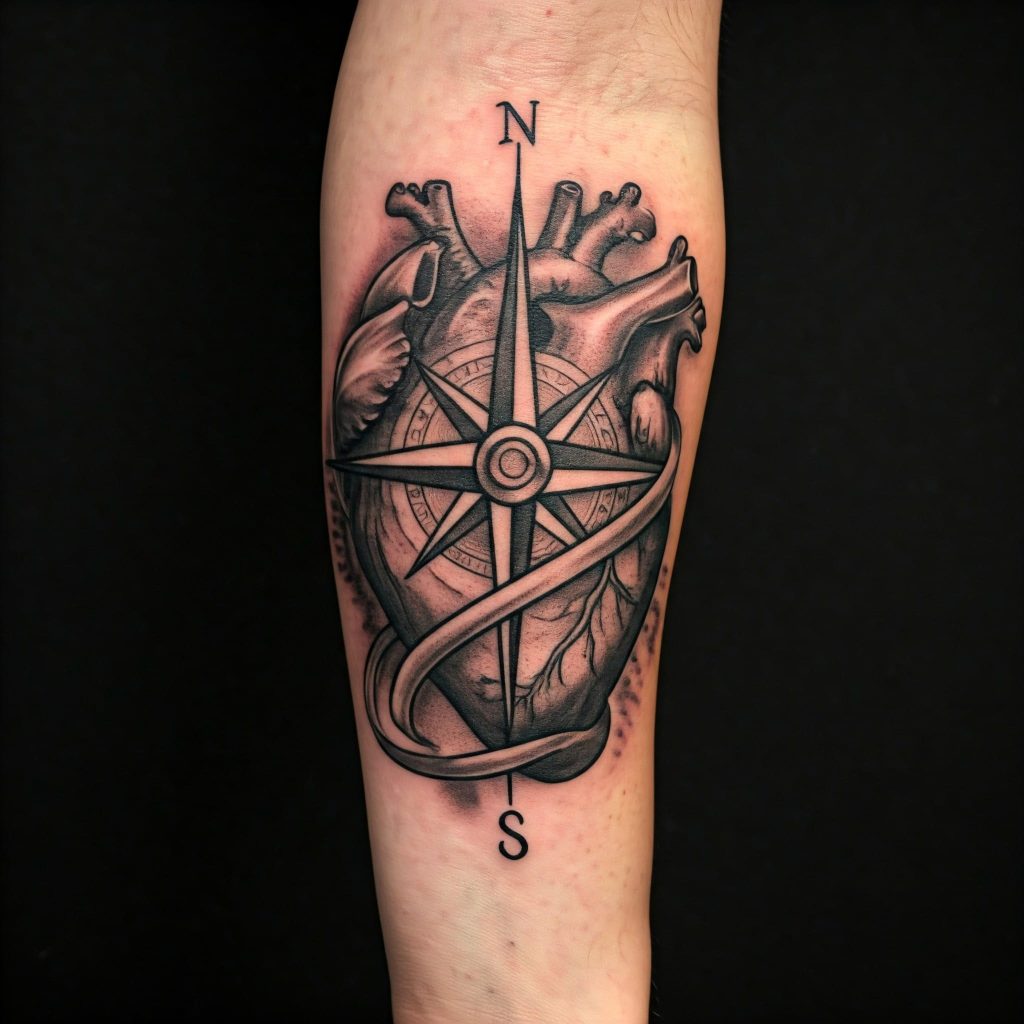
A heart can identify love, family, intuition, or a specific person as the wearer’s point of reference. An anatomical heart gives the piece a different mood from a simple heart outline. Names and dates should be treated as deliberate information, not filler around the compass.
Broken Compass Tattoo
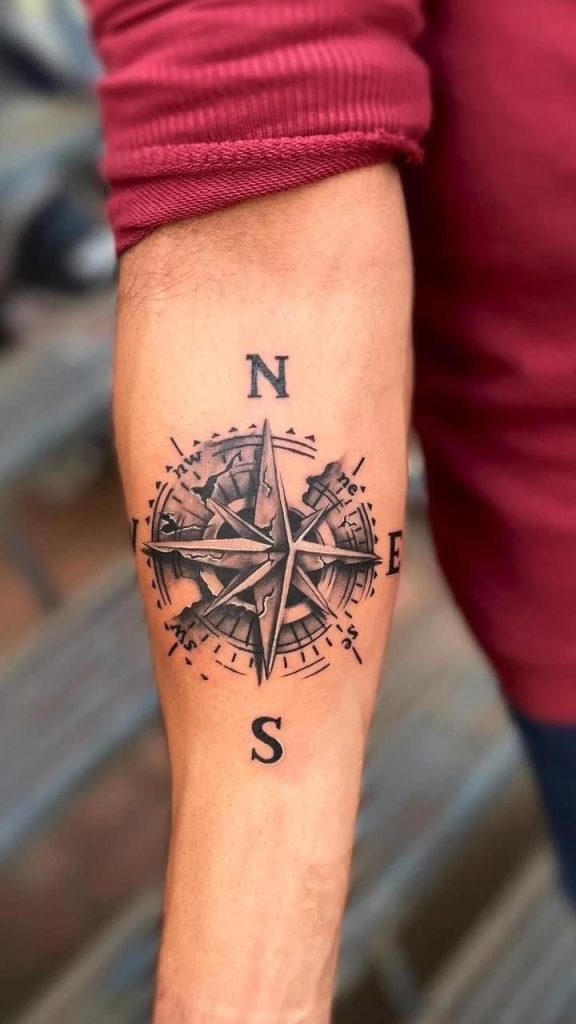
A broken or off-course compass can represent uncertainty, a changed plan, loss, or freedom from an old direction. It can also be purely dramatic imagery. The broken detail needs to be obvious enough to read as intentional rather than as an incomplete compass.
Vegvísir and the “Viking Compass” Label

Vegvísir is often marketed as a “Viking compass,” but that label is historically misleading. The symbol is documented in the 19th-century Icelandic Huld manuscript, not established as a Viking-age navigation instrument. If you choose it, research the Icelandic manuscript context and avoid presenting a modern popular interpretation as proven Viking history.
Compass Tattoo Placement Ideas
Forearm Compass Tattoo
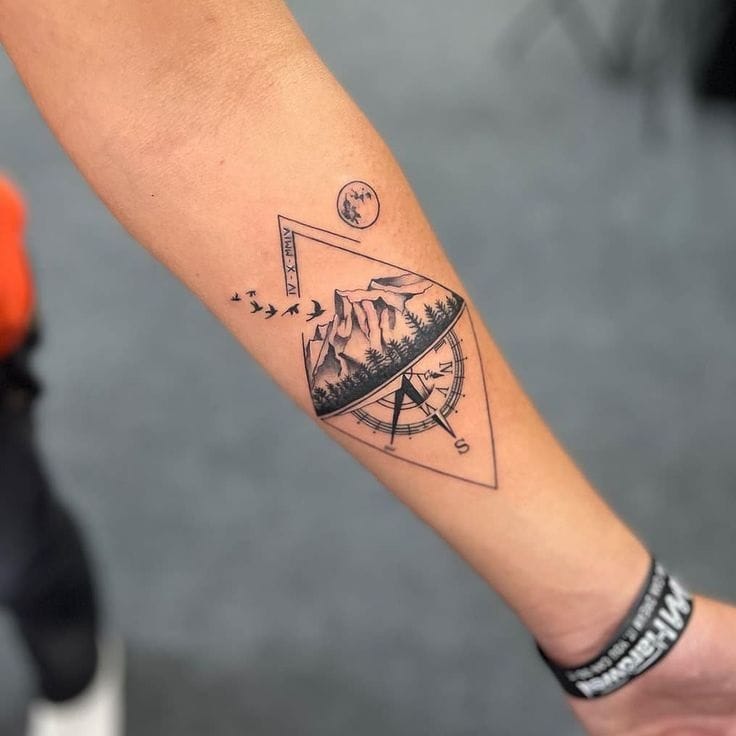
The forearm offers a relatively flat area and enough length for a compass with a route, mountain, arrow, or short text. It is also highly visible. Rotate the stencil with the artist while your arm rests naturally so the design reads well in everyday positions.
Leg and Calf Placement
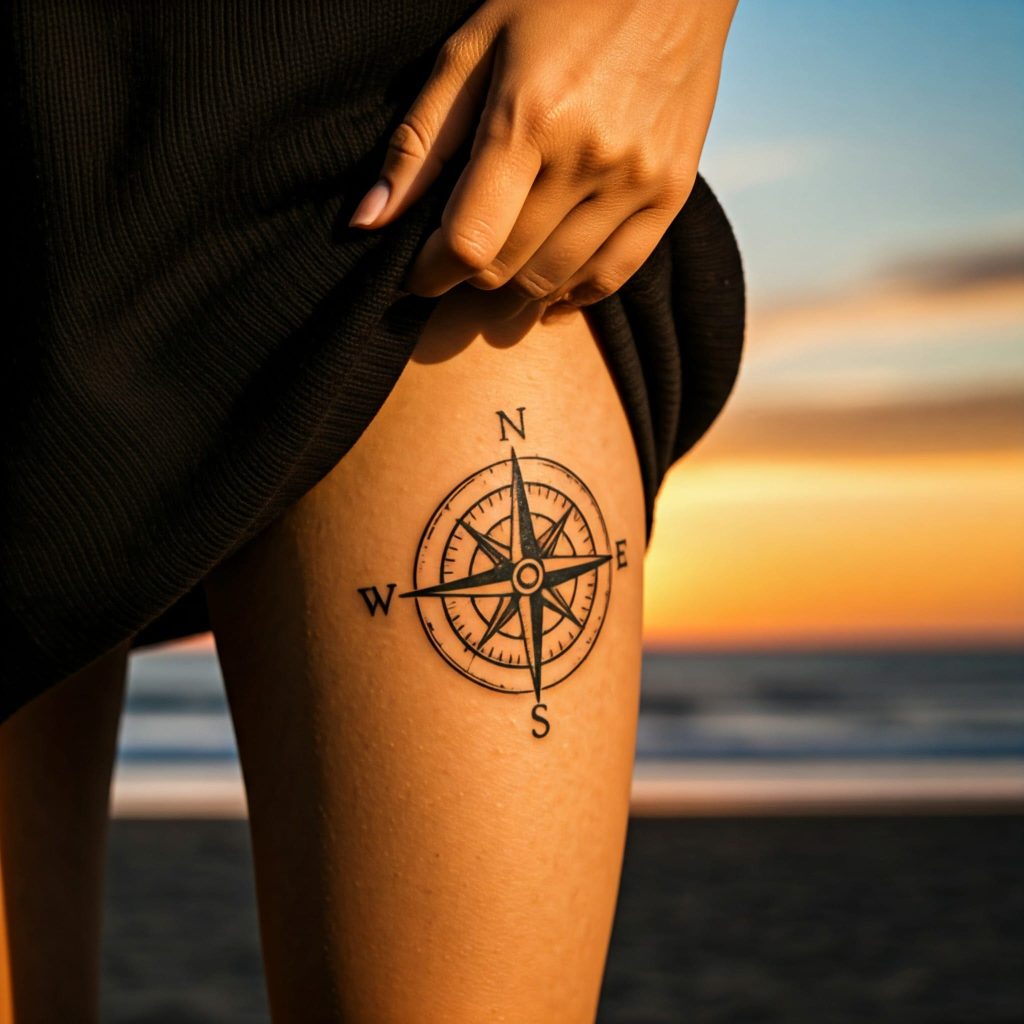
The calf supports circular designs and vertical additions such as a needle, path, or landscape. The thigh offers more room for realistic shading or a map. Consider how trousers, socks, movement, and sun exposure interact with the exact placement.
Shoulder Placement
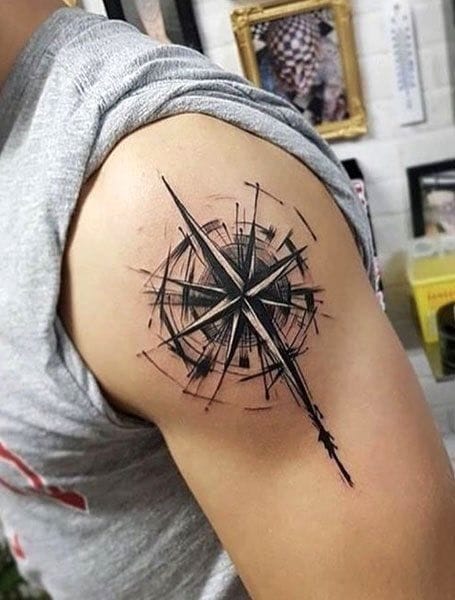
The shoulder can hold a centered compass and allows the design to extend toward the upper arm, chest, or shoulder blade. Pain varies and no placement is guaranteed to be easy. The artist can explain how the design will curve across the shoulder rather than judging it only on flat paper.
Hand and Wrist Placement
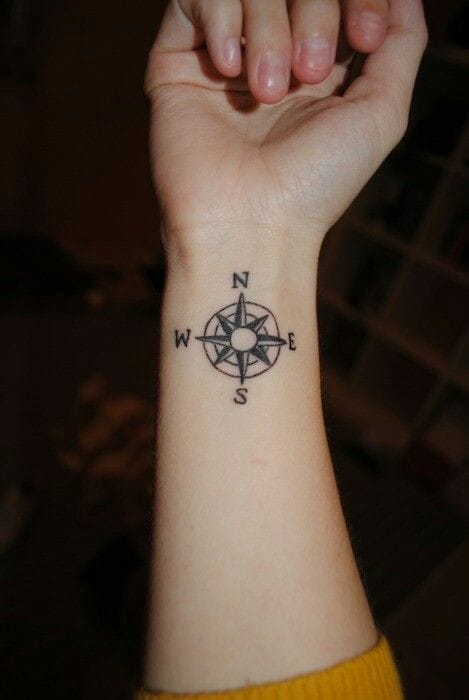
A hand or wrist compass stays visible and can act as a frequent personal reminder. These areas also receive movement, washing, friction, and sun exposure. Ask an experienced artist about suitability, expected aging, workplace considerations, and whether a slightly larger forearm placement would hold detail better.
Elbow Placement
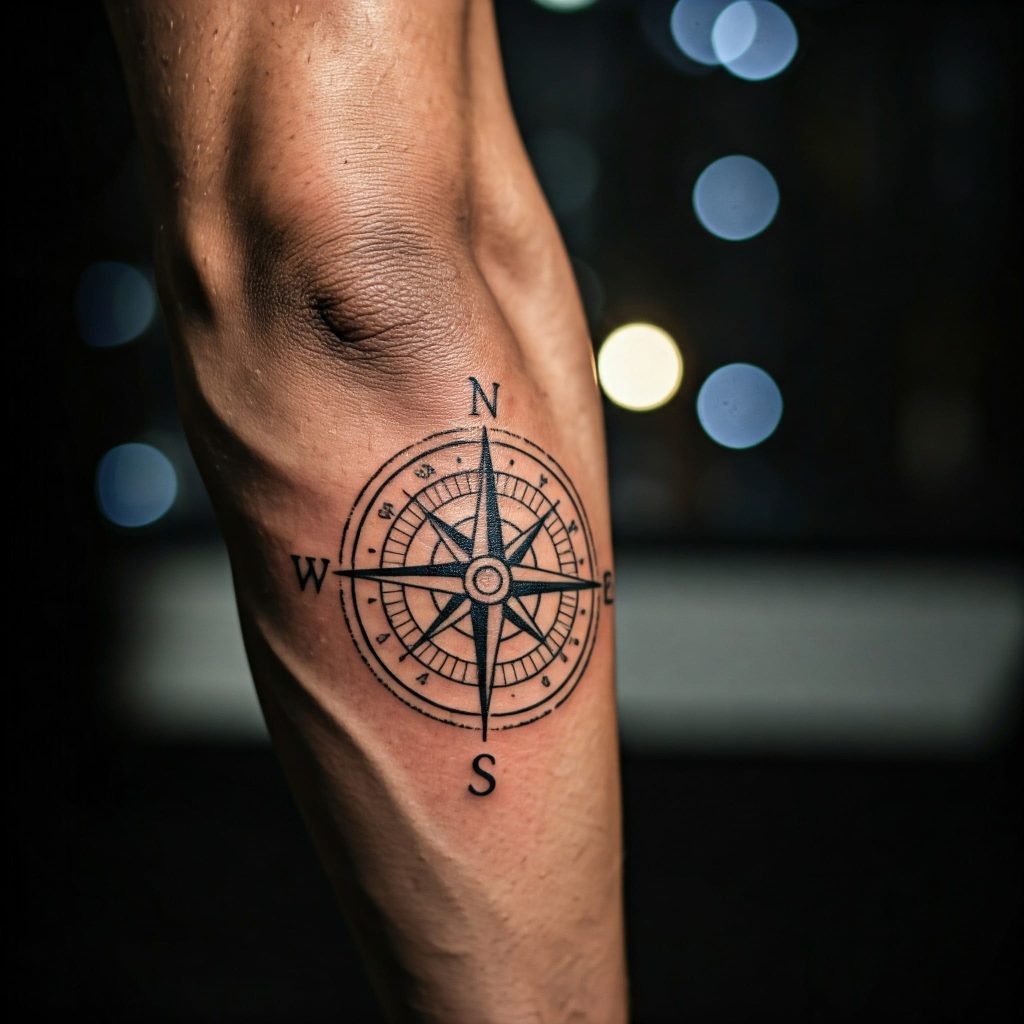
The circular form can fit around the elbow, but the joint bends and the skin texture changes across the area. Elbows are also commonly described as sensitive. A design should be planned directly on the body so the center, points, and negative space remain coherent when the arm moves.
Chest Placement
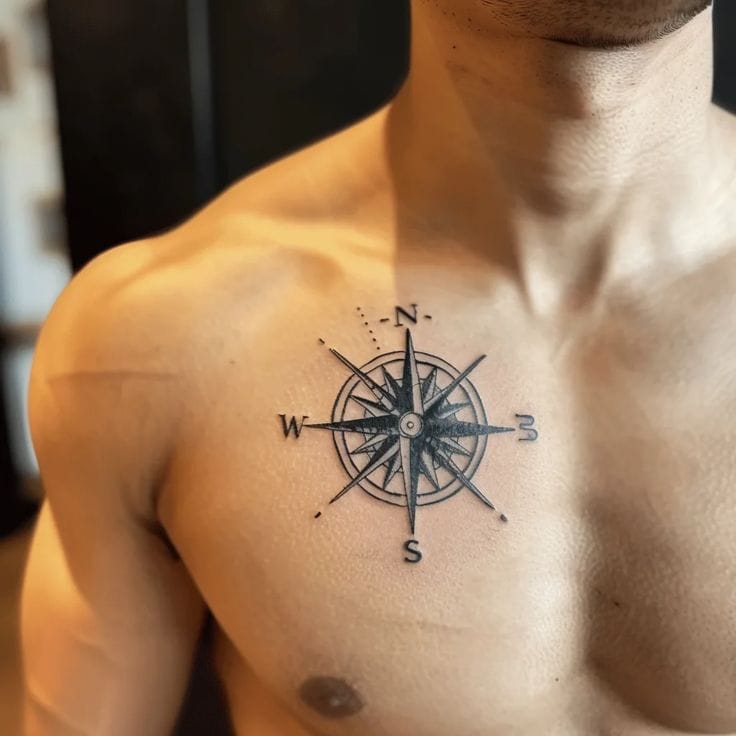
The chest provides room for a larger compass, symmetrical framing, and added landscape or lettering. Placement over the sternum, ribs, or pectoral area can feel different, and comfort varies widely. Decide whether the tattoo should align with the body’s center or sit over one side.
How to Plan a Compass Tattoo
Start with one clear purpose: a real destination, a person, a change in direction, or a visual style. Then choose the minimum number of symbols needed to communicate it. A compass, map, clock, crown, heart, and quote in one small piece will usually compete for space.
Bring references for composition and technique, but ask for an original drawing rather than a copy of another person’s tattoo. Check cardinal letters, coordinates, dates, map outlines, and clock hands before the stencil is applied. Our first tattoo preparation checklist covers booking and appointment planning.
Placement and pain are individual. Compare practical factors in our guides to small tattoo meanings and placements and the least painful places for a first tattoo, without assuming any area will be pain-free.
After the appointment, follow the instructions from your tattoo artist. Our general tattoo aftercare and healing guide can provide beginner-friendly context, but it does not replace professional instructions or medical care.
Frequently Asked Questions
Does a compass tattoo always mean guidance?
No. Guidance is a common interpretation, but the design may refer to travel, home, family, a personal turning point, or simply an interest in navigation imagery. The wearer’s reason is more accurate than a universal symbol list.
Should the compass point north?
It does not have to. North may be meaningful, but a needle can point toward a location, date, or direction connected to the design. If directional accuracy matters, confirm the orientation with the artist while the stencil is on the body.
Can a detailed compass be a small tattoo?
Only to a limit. Interior rings, letters, map lines, and shading need enough space to remain distinct. A simpler compass can be smaller than a realistic mechanical design. Let the artist recommend the minimum workable size.
Safety note: This article provides general educational information, not medical advice. George is a tattoo enthusiast and editor, not a tattoo artist or medical professional. Choose a reputable tattoo professional, follow their aftercare instructions, and contact a qualified healthcare professional if redness, pain, swelling, discharge, fever, or other symptoms worsen rather than improve.