
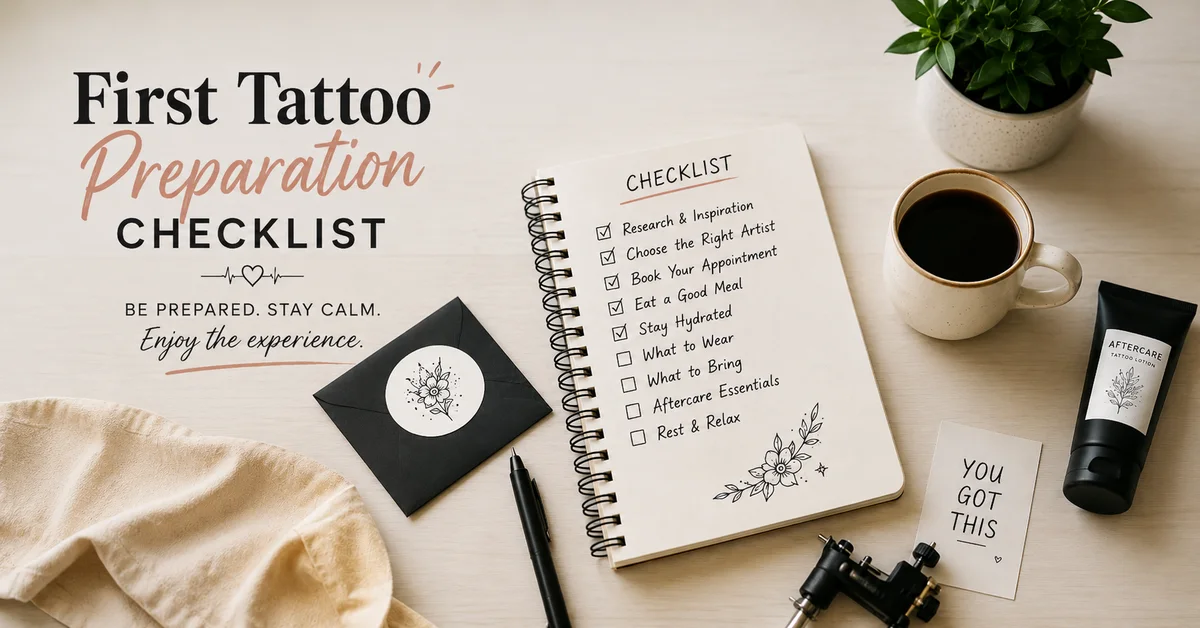
The night before a first tattoo, most people aren’t worried about the design anymore. They’re worried about the small stuff. What do I wear? Do I eat first, or will that make me feel weird? What am I supposed to bring? And that strange little question almost everyone thinks but rarely says out loud: what actually happens once the stencil goes on and it’s suddenly real?
Those questions are normal, and they’re the whole reason this checklist exists. Good first tattoo preparation isn’t about being fearless. It’s about removing the avoidable stress so the only thing left is the part you signed up for. If you’re still deciding on placement and you want a sense of how much different spots tend to hurt, our tattoo pain chart is a useful place to start before you read on.
This is general information from a tattoo blog, not medical advice. Always follow what your own artist tells you, and if you have health concerns, allergies, or a skin condition, talk to a healthcare professional before you book.
Quick Answer: How to Prepare for Your First Tattoo
If you only have a minute, here’s the short list. Confirm your design and placement ahead of time so nothing is up in the air on the day. Sleep well the night before. Eat a real meal before you go, and drink some water so you feel steady. Skip alcohol. Wear comfortable clothes that give the artist easy access to the spot. Bring your ID, a payment method, water, a small snack, and your reference images. And ask your artist about aftercare before you leave the chair.
That’s the core of it. The rest of this guide explains the why behind each step, plus the little details first-timers usually only learn the hard way.
1. Choose a Placement You Can Actually Handle
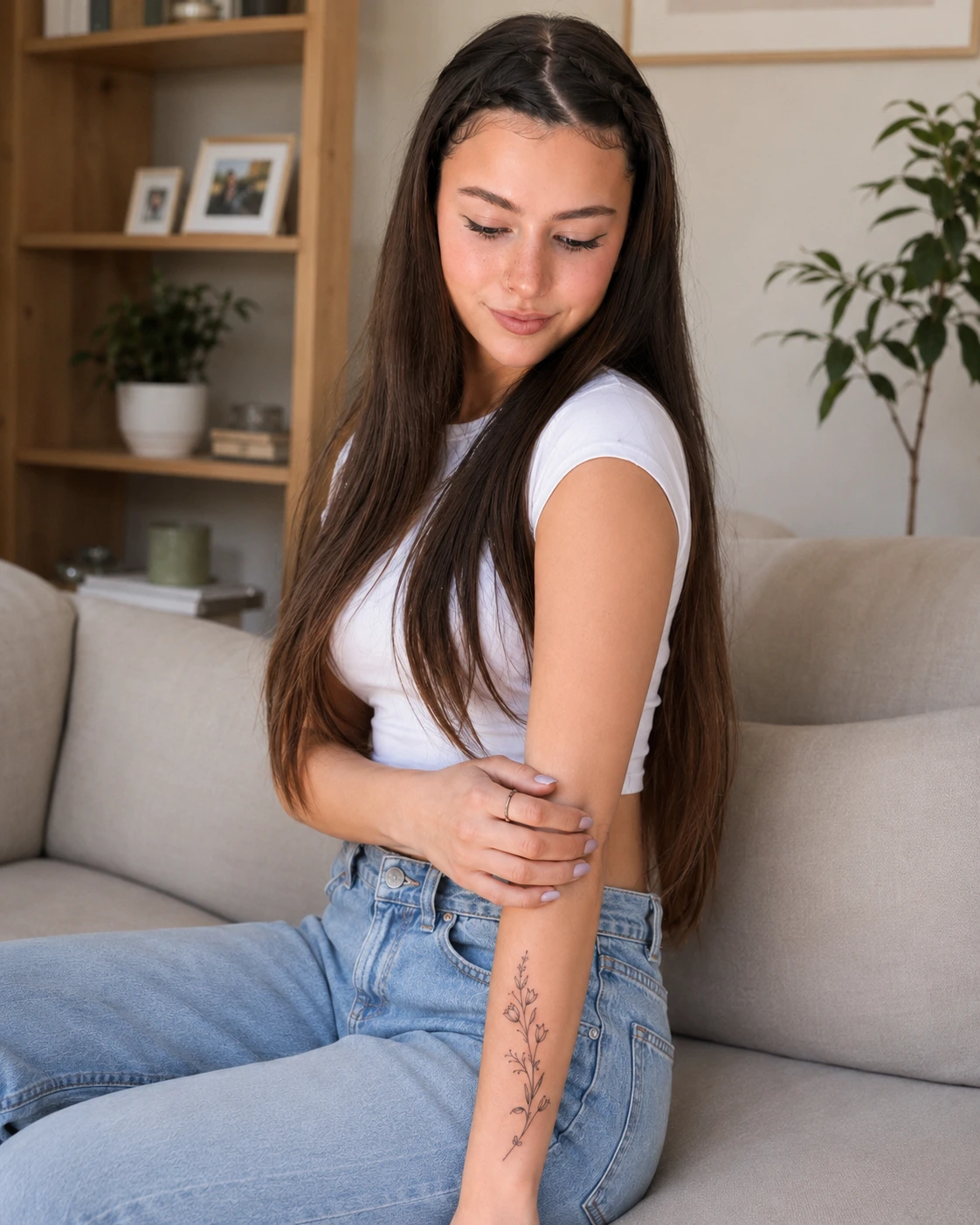
Placement is one of the first real decisions you’ll make, and it affects more than how the tattoo looks. It affects how the session feels, which for a first-timer matters a lot. A spot that’s calmer to sit through gives you room to relax, breathe, and actually enjoy the experience instead of white-knuckling it.
For a first small tattoo, a few areas tend to be more forgiving:
- Outer forearm
- Outer upper arm
- Outer thigh
- Calf
These spots usually have a bit more cushion and fewer of the nerve-heavy, bony areas that people describe as sharp. If you want to compare options in more detail, we break them down in our guide to the least painful places to get a tattoo.
One honest note, though: lower pain is not the same as pain-free. Everyone’s body reads sensation differently, and even an “easy” area still feels like something. Pick a placement you’re genuinely comfortable with, not just one that photographs well.
2. Finalize the Design Before Appointment Day
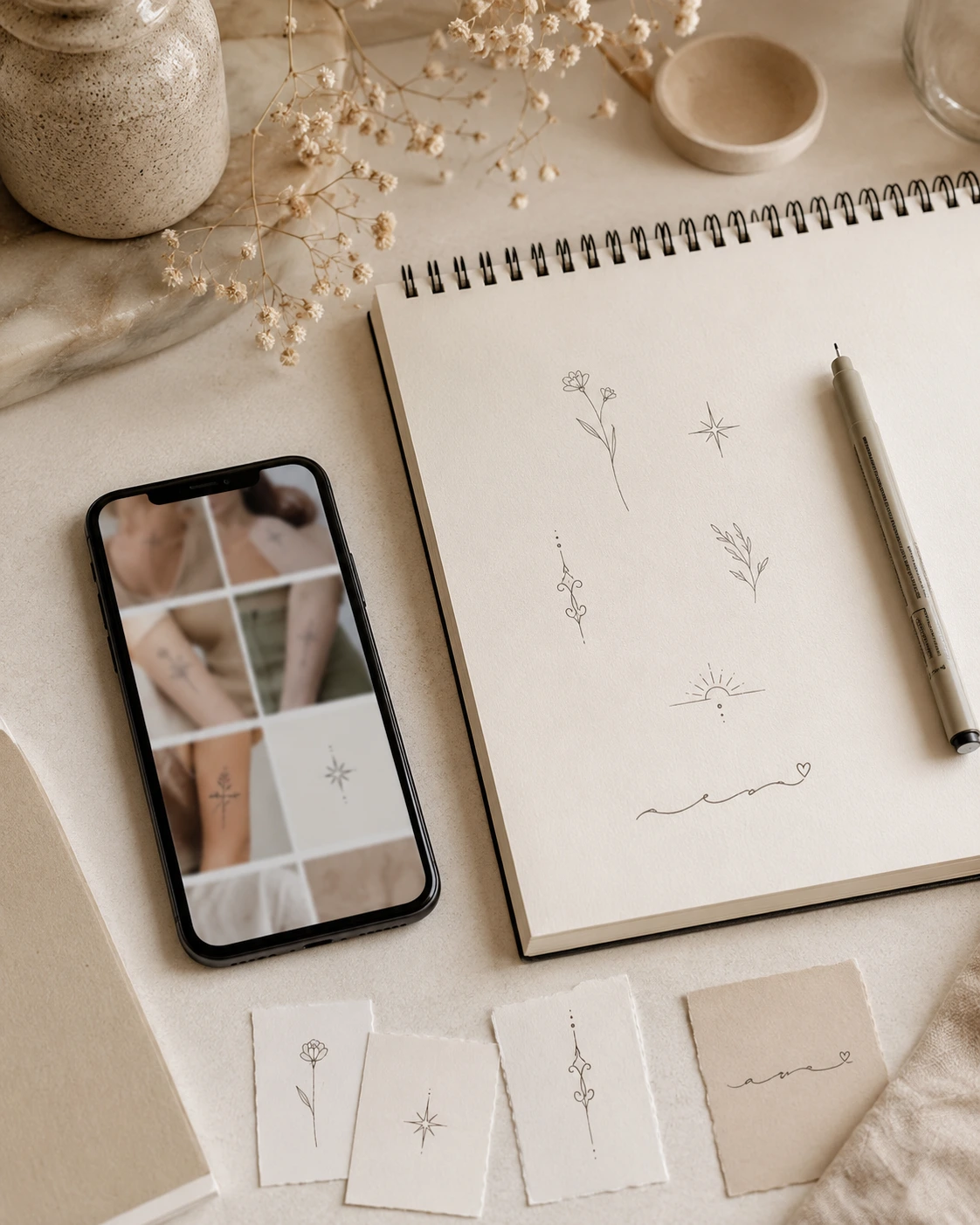
Try to walk in with your design as settled as possible. That means size, placement, and style all decided ahead of time, not sketched out in the parking lot. When those pieces are locked in, the appointment moves smoothly and you’re not making big choices while your nerves are already up.
Think about the look you’re after. Fine-line work reads delicate and clean, but very thin lines can shift a little as a tattoo settles over the years, so some designs age better slightly bolder. If you’re not sure which direction suits your idea, that’s exactly the kind of thing to raise with your artist early.
Reference images help a lot here. Bring photos of tattoos, styles, or shapes you like, and be ready to explain what draws you to them. Just keep an open mind, because your artist may adjust the design so it sits and flows better on your actual body. Skin isn’t flat paper, and a small tweak often makes a piece look far better in real life.
What you want to avoid is the last-minute redesign. Deciding to completely change the concept on the day adds stress for you and pressure on your artist, and rushed decisions are the ones people tend to regret. Settle it early, then let it be.
3. Questions to Ask Your Tattoo Artist Before You Go
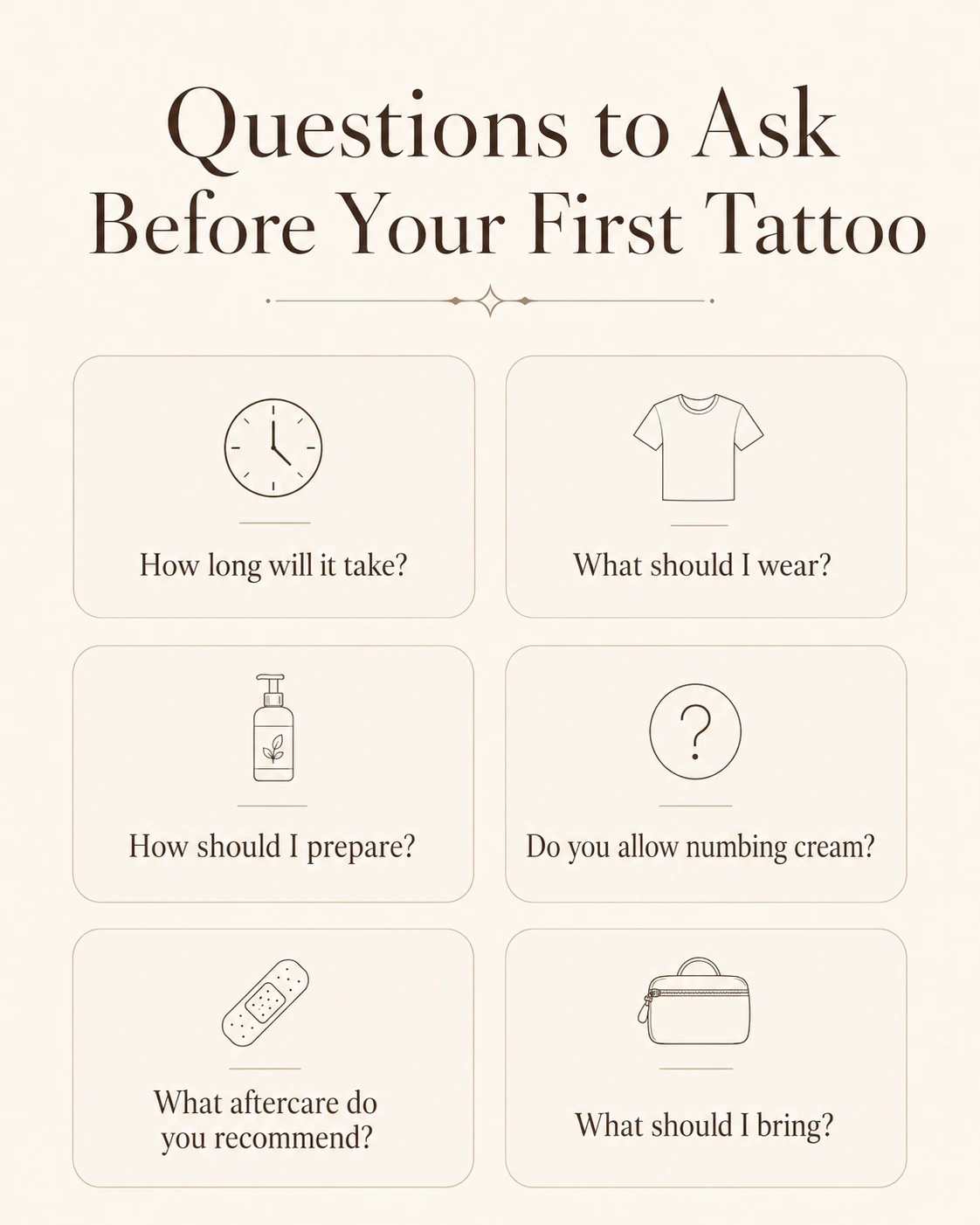
Messaging your artist a few practical questions before the appointment makes the whole thing less mysterious. Most artists are happy to answer, and their studio may have specific preferences. A few worth asking:
- How long will the tattoo take?
- What should I wear for this placement?
- Should I prepare the skin in any way beforehand?
- Should I avoid putting lotion on the area that day?
- What aftercare do you recommend?
- Do you allow numbing cream, and if so, which kind?
- Is there anything specific I should bring?
The numbing cream question matters more than people realize. Don’t buy a product and slather it on before you arrive without checking first. Topical numbing products can cause problems if they’re used incorrectly, and some artists don’t want them used at all because of how they can affect the skin. Ask, then follow their answer.
4. What to Do the Night Before
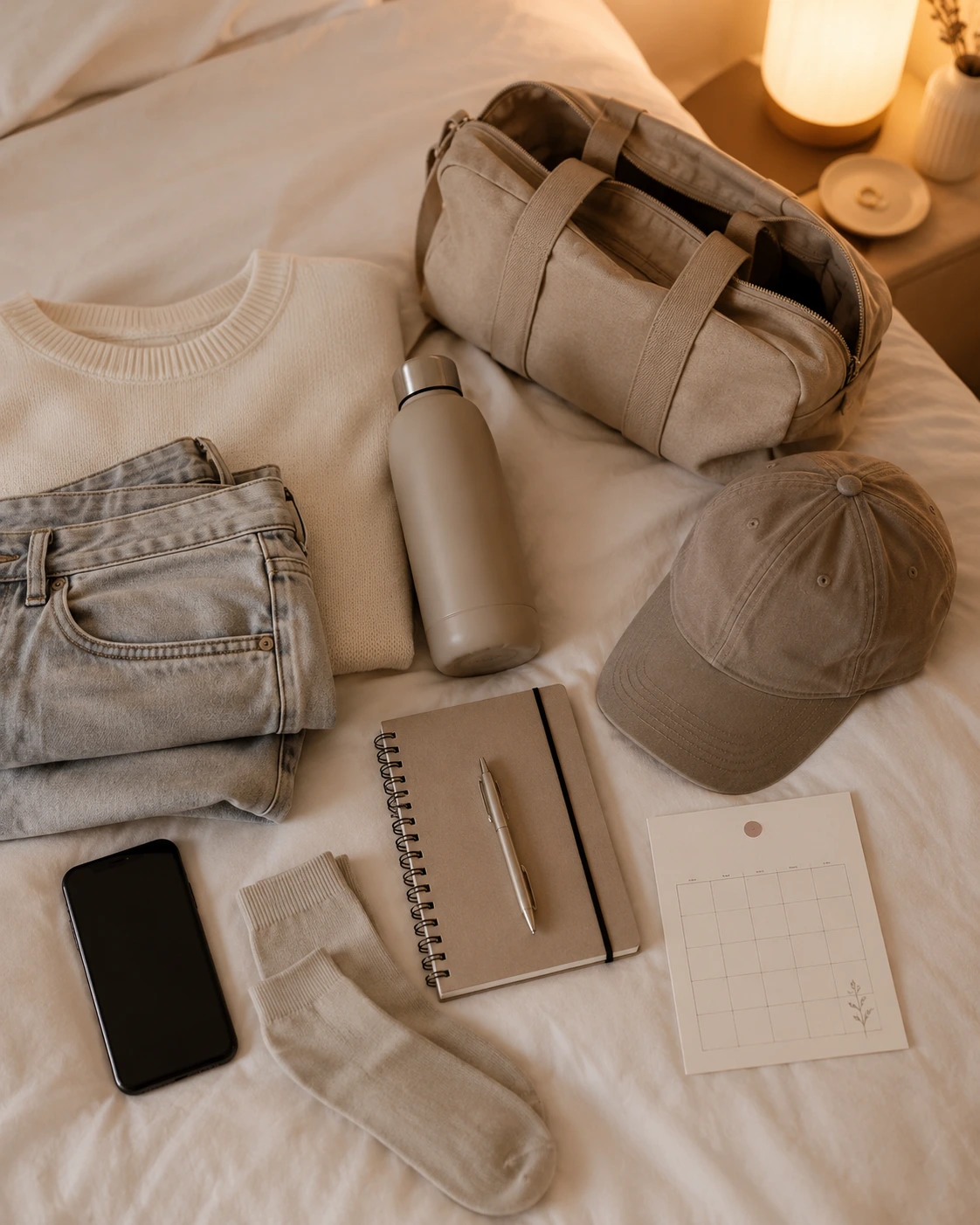
The night before is where good first tattoo preparation quietly happens. Aim for a solid night of sleep. Going in tired makes it harder to sit still and easier to feel every little thing, so this is not the night to stay up late.
Skip the alcohol. On top of a range of other reasons, many reputable studios simply won’t tattoo someone who’s been drinking, and turning up buzzed can get your appointment cancelled outright.
Pack your bag before bed so you’re not scrambling in the morning. Confirm the studio address and your appointment time, then lay out the clothes you’re planning to wear. Small stuff, but it removes that frantic morning energy.
And here’s the last one: stop redesigning your tattoo at midnight. The version you already agreed on is good. Second-guessing it in the dark rarely improves anything and usually just costs you sleep.
5. What to Eat and Drink Before a Tattoo

Eat a proper meal before your appointment. Not a snack you grab on the way, but an actual meal a couple of hours ahead. Arriving hungry is one of the most common first-timer mistakes, because an empty stomach can leave you feeling shaky or lightheaded once you’re in the chair and the nerves kick in.
Drink some water too. Staying hydrated won’t do anything magic to your skin, but it can help you feel steadier and more comfortable during the session, which is really what you want going in.
If you’re booked for a longer sitting, bring a light snack. Something simple like a granola bar or a piece of fruit can make a big difference if your energy dips partway through. Nervous people especially tend to get dry-mouthed or a little jittery, and a snack and some water go a long way toward keeping you level. None of this is complicated, which is sort of the point.
6. What to Wear to Your Tattoo Appointment
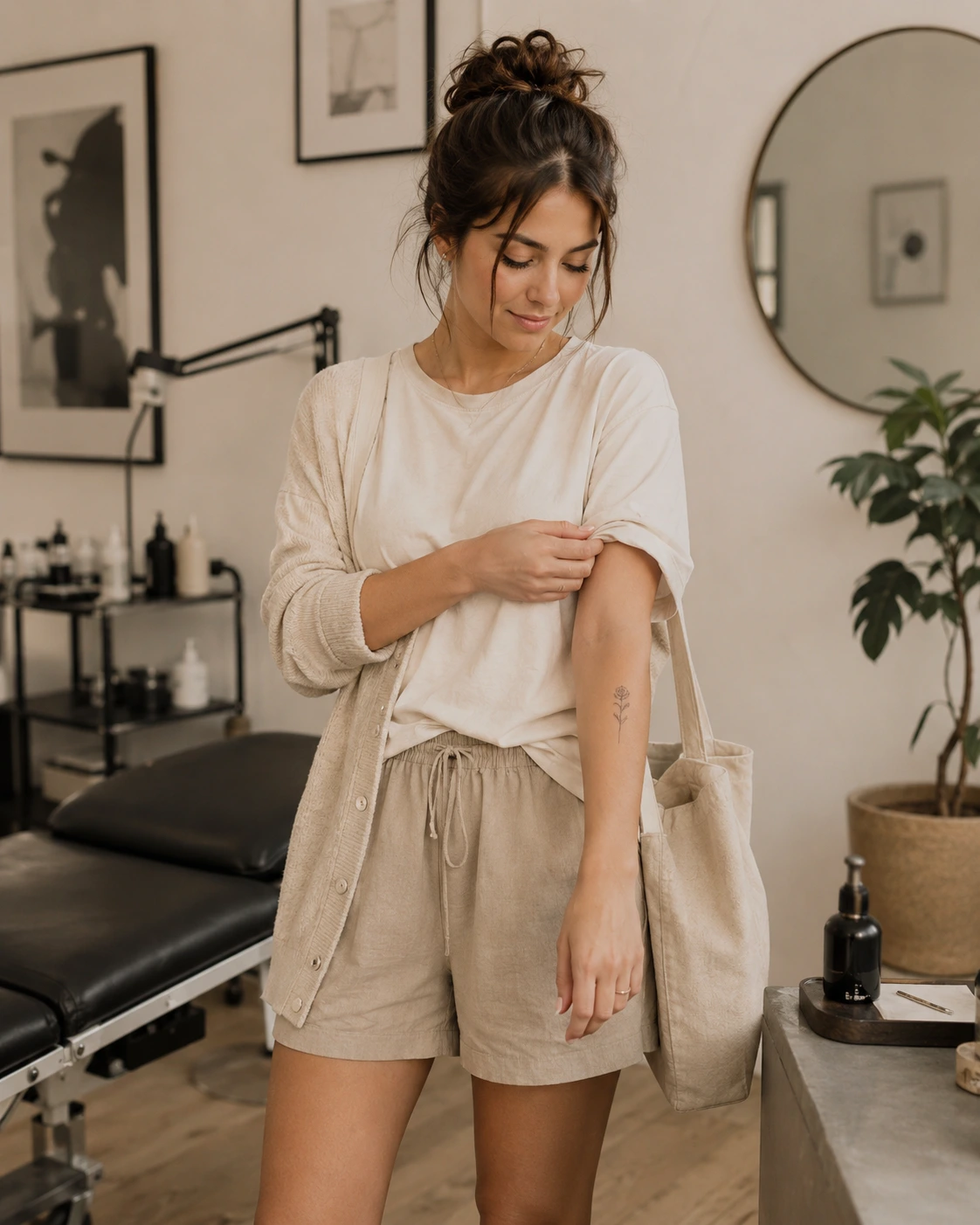
What you wear should make the placement easy to reach. This is one of those things first-timers underestimate until they’re standing there trying to figure out how to expose a spot without taking everything off. A quick guide by area:
Forearm: A short sleeve or a sleeve that rolls up easily. A tight sleeve that won’t push past your elbow is genuinely annoying for a forearm tattoo, and you’ll be fighting it the whole time.
Upper arm: A tank top or loose short sleeve so the whole area is open.
Thigh: Loose shorts. Tight jeans for a thigh tattoo make the session awkward, since there’s often nowhere to comfortably put them once the area needs to be clear.
Calf: Shorts, or pants that roll up high without cutting off circulation.
Shoulder or back: A loose top, a strappy top, or something you don’t mind adjusting. For some back placements people bring an old button-up they can wear backwards.
A few general rules across all of them. Go loose rather than tight, since fabric pressing on a fresh tattoo isn’t comfortable on the way home. Wear clothes you don’t love, because a little ink, stencil fluid, or aftercare ointment can end up on them. And if the studio tends to run cold, bring a layer so you’re not tensing up from the chill.
7. What to Bring to Your First Tattoo Appointment

Here’s a packing checklist, with a bit of context so you know why each thing earns its spot in your bag:
- Valid photo ID. Non-negotiable. Forgetting your ID can stop the appointment before it starts, no matter how ready you are otherwise.
- Payment method. Confirm in advance whether the studio takes card or cash, so you’re not caught out.
- A tip, if appropriate. Tipping isn’t mandatory everywhere, but many people like to, and it’s easier if you’ve planned for it.
- Water. Simple, but easy to forget.
- A light snack. For longer sessions or dipping energy.
- Your phone. For music, distraction, or just something to look at.
- A charger or power bank. A dead phone during a long sit is a small misery.
- Reference images. Even if you sent them ahead, having them on hand helps.
- A hair tie, if your hair might get in the way.
- A comfortable layer, in case the studio is cold.
- Any instructions your artist gave you, so you actually follow them.
- Aftercare product only if your artist told you to bring one. Otherwise, wait and use what they recommend.
8. What Not to Do Before a Tattoo
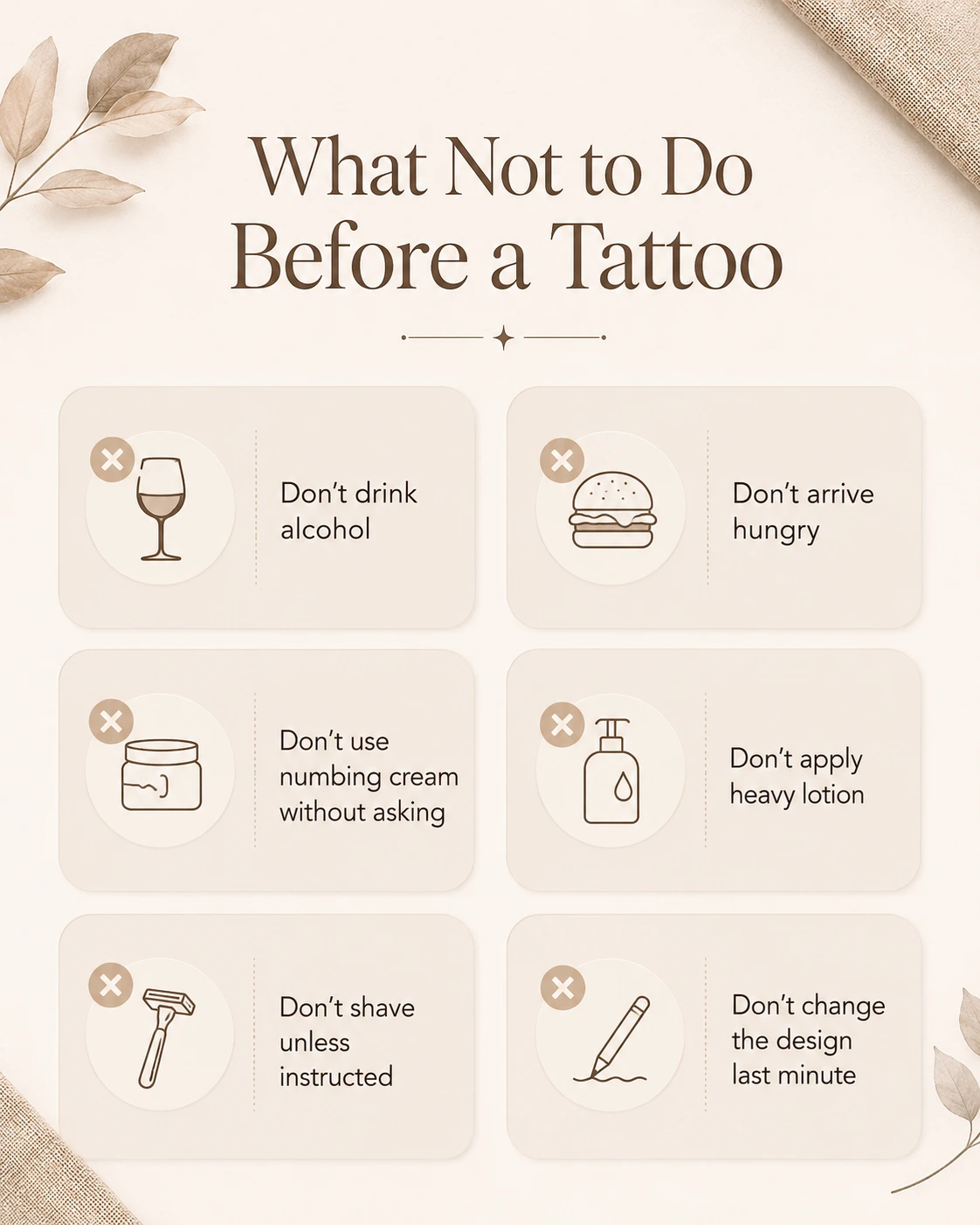
Just as useful as the do list is the don’t list. Keep these in mind:
- Don’t drink alcohol beforehand. Many studios will turn you away for it.
- Don’t show up hungry. Eat first.
- Don’t use numbing cream without asking your artist.
- Don’t slather on heavy lotion the day of unless you’ve been told to.
- Don’t shave the area yourself unless your artist specifically asked you to. They usually prefer to prep the skin their way.
- Don’t arrive sick. If you’re unwell, it’s kinder to yourself and your artist to reschedule.
- Don’t completely change the design at the last minute.
- Don’t ignore health concerns. If you have allergies, a skin condition, or anything you’re unsure about, sort it out with a healthcare professional before you book.
9. How to Stay Calm During the Session
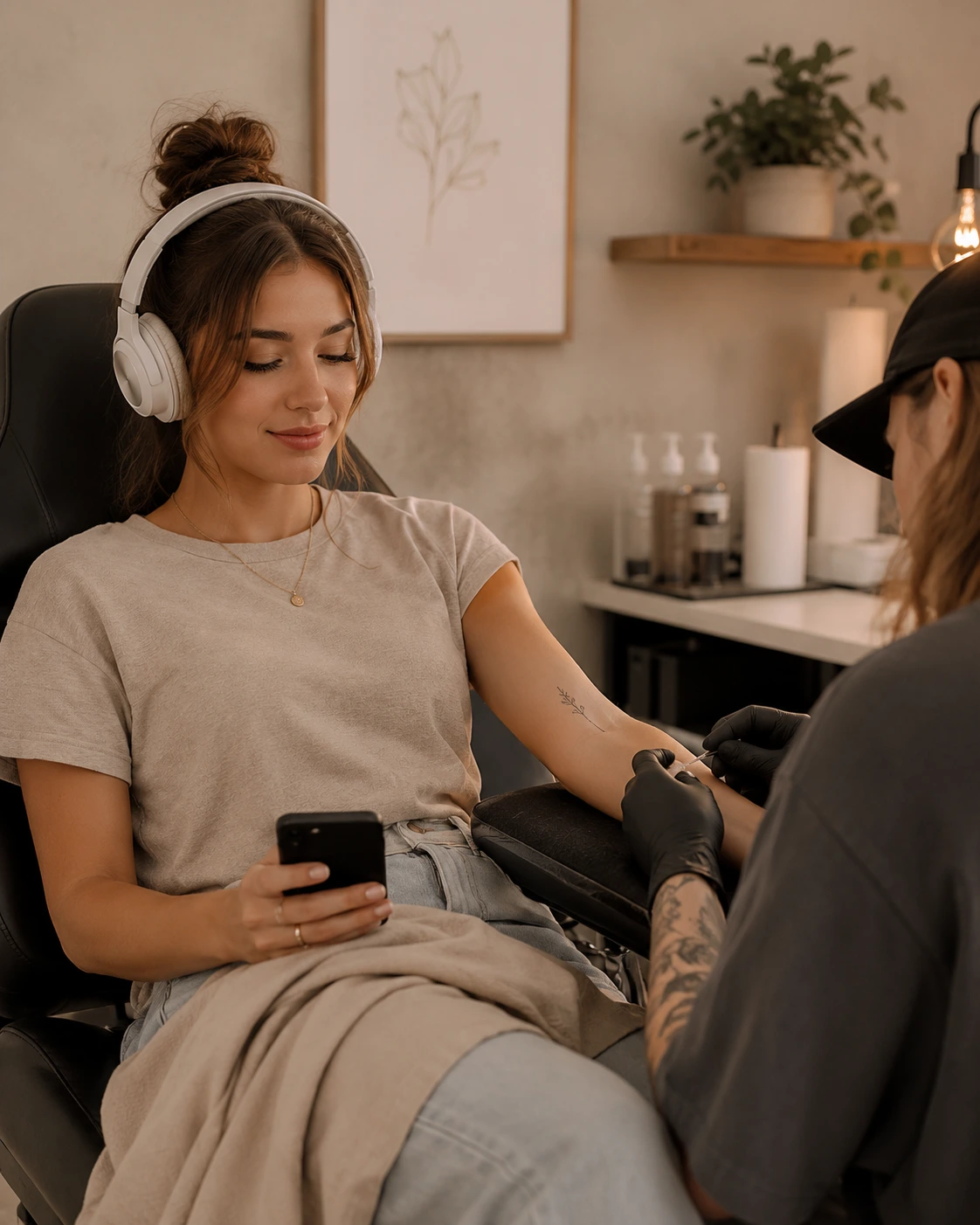
Once you’re in the chair, a few small habits help more than you’d expect. Steady, slow breathing is the big one. When people tense up and hold their breath, everything feels sharper, so keep breathing normally and let your shoulders drop.
If the needle makes you uneasy, just look away. Plenty of people prefer not to watch, and there’s nothing wrong with that. Bring headphones and put on music, a podcast, or a show if the studio allows it. A distracted mind handles the sensation better than a fixated one.
It’s also completely fine to ask for a short break if you need one. Artists hear this all the time and would much rather pause than have you push through feeling awful.
Two honest things to expect. The first few seconds are often the most surprising part, because your body doesn’t know what’s coming. Once you settle in, it usually becomes a lot more manageable. And small tattoos are often quicker than people picture. Many first-timers spend more time nervous in the waiting area than in the actual chair.
10. What Happens After the Tattoo Is Finished
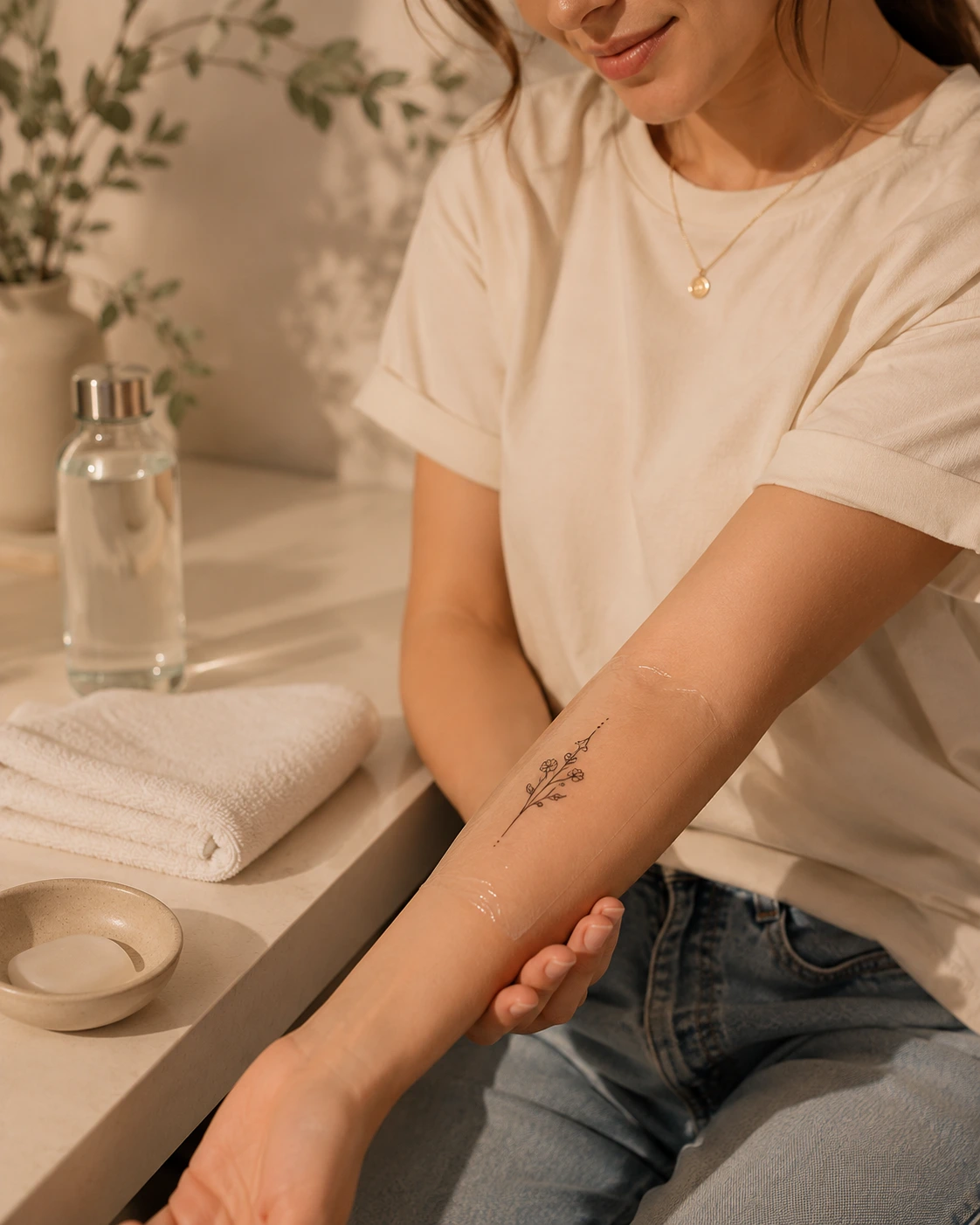
When the tattoo is done, your artist will clean the area and then cover it to protect it. What they use varies. Some studios use a simple wrap, others use a clear adhesive film, and the covering they choose affects how long you leave it on and when you first clean the tattoo. That’s why their specific instructions matter more than anything you read online, including here.
Listen carefully to the aftercare they give you, and ask questions if anything is unclear. When you get home, take it easy. Plan a calm rest of the day rather than heading straight to the gym or out for a long night. A fresh tattoo does best when you’re not putting it through much.
For a fuller walkthrough of the healing process and what to expect over the coming days and weeks, see our tattoo aftercare and healing guide.
First Tattoo Preparation Checklist
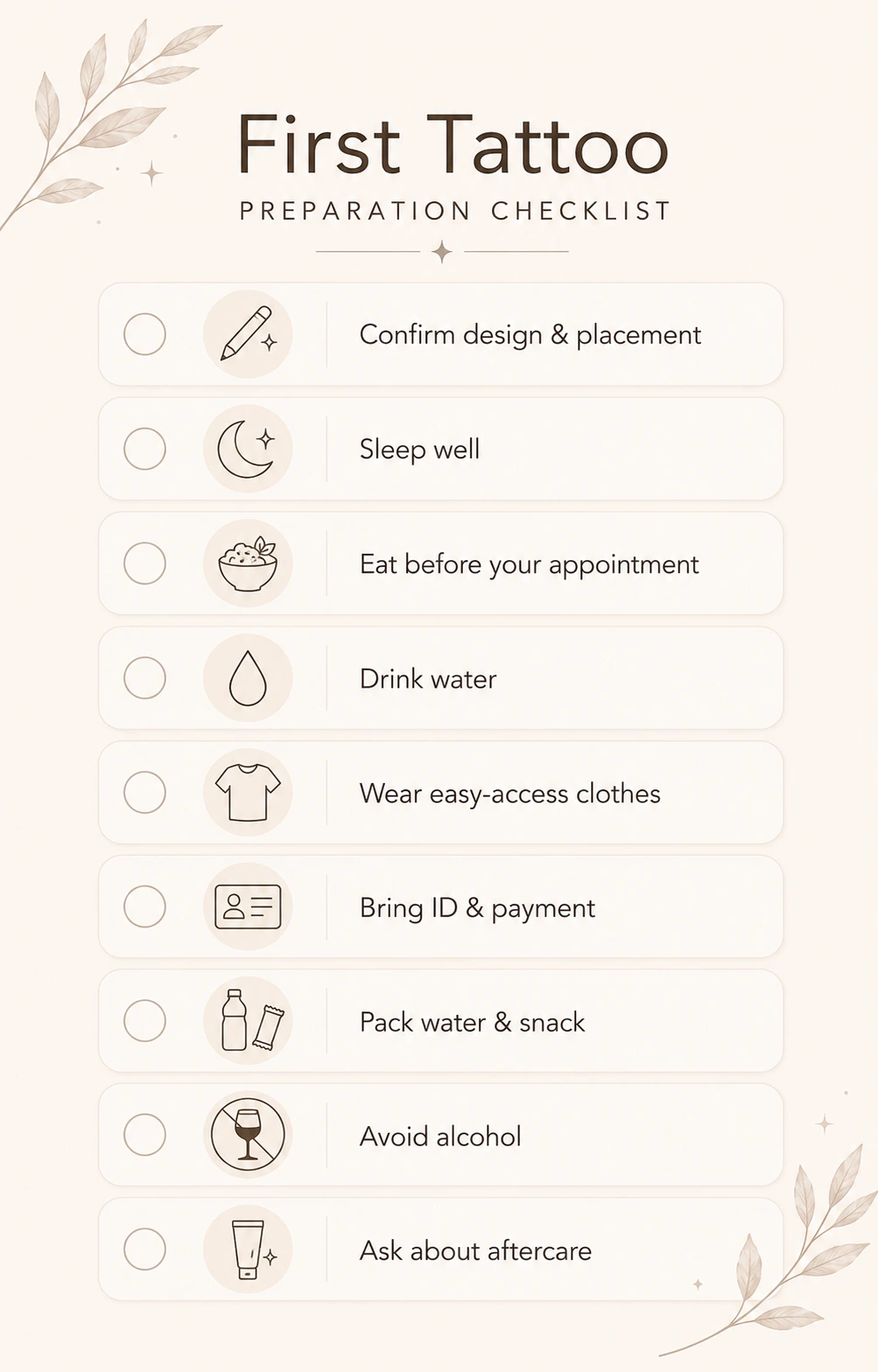
Here’s the whole thing in a scan-friendly list you can check off before you go:
- Confirm design and placement
- Ask your artist practical questions
- Sleep well the night before
- Eat a real meal before your appointment
- Drink water
- Wear easy-access, comfortable clothing
- Bring ID and payment
- Pack water and a snack
- Bring your reference images
- Avoid alcohol
- Avoid numbing cream unless your artist approves it
- Plan a calm rest of the day
- Follow your artist’s aftercare instructions
Editor’s Note for First-Timers
After reading a lot of first-timer questions, one pattern stands out: most of the stress does not come from pain. It comes from not knowing what is normal.
So let this take some pressure off. You don’t have to be perfectly calm, and you don’t have to sit there stone-faced. You just need to show up fed, rested, and prepared, and be honest with your artist if you need a minute. That’s genuinely enough. The people who have a good first experience aren’t the fearless ones. They’re the ones who came ready and let themselves relax into it.
Common First Tattoo Preparation Mistakes
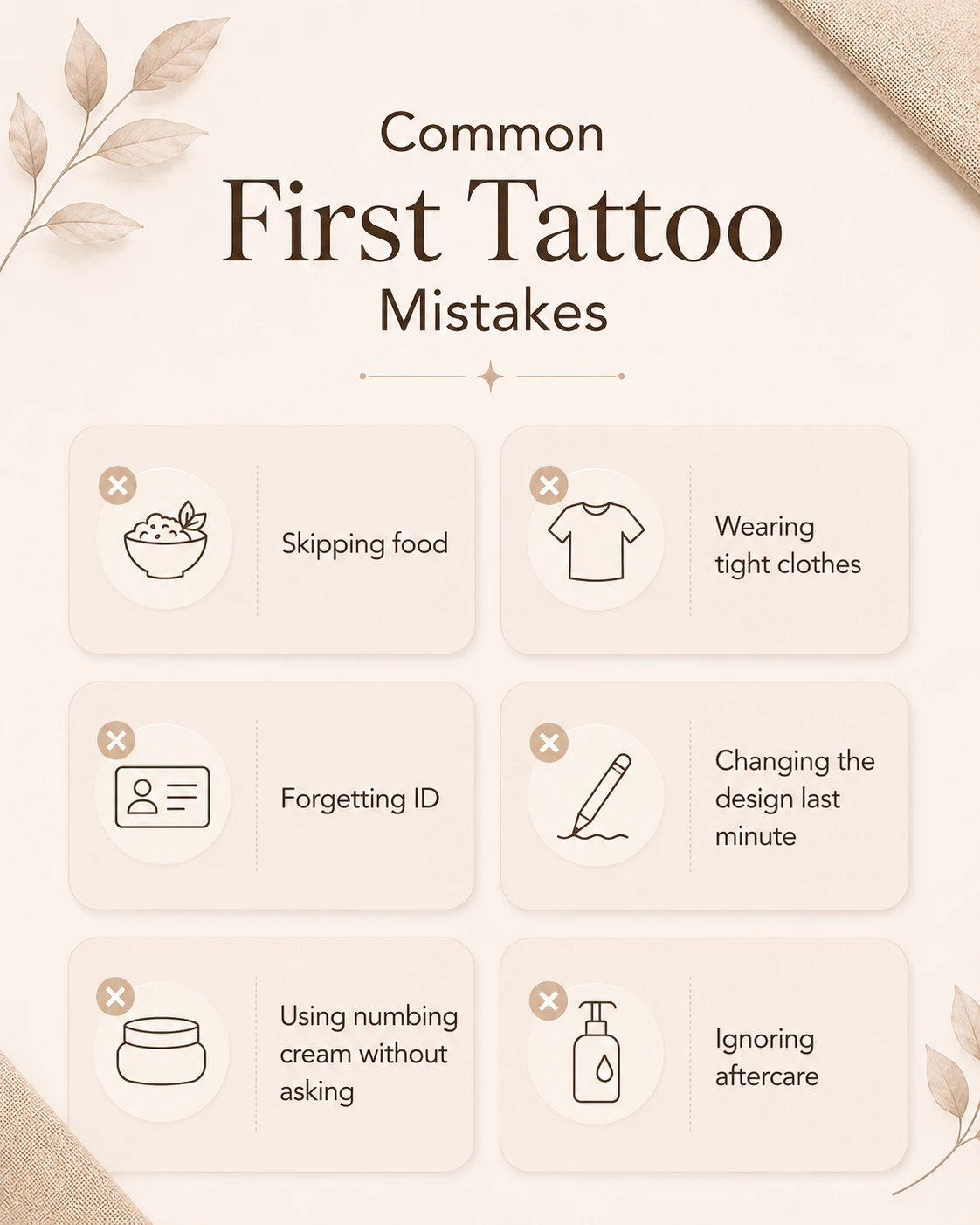
A few mistakes come up again and again with first-timers. Knowing them ahead of time is half the battle:
- Choosing a placement only because it looks good in photos, not because you can comfortably sit through it.
- Not eating beforehand and feeling shaky in the chair.
- Wearing the wrong clothes and struggling to expose the area.
- Forgetting ID or payment and derailing the whole appointment.
- Using numbing cream without asking the artist first.
- Ignoring aftercare until the tattoo is already finished, instead of asking early.
- Changing the design at the last minute and adding avoidable stress.
FAQ
What should I do before my first tattoo?
Settle your design and placement ahead of time, sleep well, eat a real meal, drink some water, and skip alcohol. Pack your ID, payment, water, a snack, and reference images the night before. The goal is to walk in with nothing left to figure out.
Should I eat before getting a tattoo?
Yes. Eat a proper meal a couple of hours before your appointment. Going in hungry is a common reason people feel lightheaded or shaky in the chair, especially when nerves are already in the mix. A snack for longer sessions helps too.
What should I wear to a tattoo appointment?
Wear something loose and comfortable that gives easy access to the area being tattooed. Short or roll-up sleeves for a forearm, loose shorts for a thigh or calf, a tank for an upper arm. Pick clothes you don’t mind getting a little ink or ointment on, and bring a layer if the studio is cold.
Can I drink alcohol before a tattoo?
It’s best not to. Many reputable studios won’t tattoo someone who’s been drinking, and showing up after alcohol can get your appointment cancelled. Save the celebration for after, once you’re home and settled.
Should I use numbing cream for my first tattoo?
Ask your artist before using anything. Some allow it and have preferred products, others don’t. Topical numbing products can cause problems if used incorrectly, so don’t apply one on your own without checking first.
What should I bring to my first tattoo appointment?
Valid photo ID, a payment method, water, a light snack, your phone and a charger, reference images, and a comfortable layer. Bring an aftercare product only if your artist told you to. A hair tie and a small tip are worth having on hand too.
How long does a small first tattoo take?
It depends on size and detail, but small tattoos are often quicker than people expect. Many take well under an hour once the setup and stencil are done. Ask your artist for a time estimate ahead of the appointment so you can plan around it.
What should I do after my first tattoo?
Your artist will clean and cover the tattoo and give you aftercare instructions. Follow those closely, keep the day low-key, and don’t pick at or overwork the area. For the full healing timeline, our aftercare guide walks through what to expect.
This article provides general educational information and is not a substitute for advice from a licensed tattoo artist or qualified healthcare professional. Always follow your artist’s instructions, and speak with a healthcare professional about health concerns, allergies, or skin conditions.
References
- American Academy of Dermatology — Caring for Tattooed Skin
- U.S. Food and Drug Administration — Warning on Certain Topical Pain-Relief Products
- Healthline — Tattoo Pain Chart: Pain Level by Location and Why