

If you’re planning your first tattoo, you’ve probably already typed the real question into your phone: how much is this actually going to hurt, and where should I put it? You want something small and meaningful, but you also want to walk into the studio knowing what to expect.
The honest answer is that placement matters more than almost anything else. Some spots are padded and forgiving. Others sit right over bone or thin, nerve-rich skin and tend to sting more. A tattoo pain chart maps those differences so you can match your design to a spot that fits your comfort level, your lifestyle, and how visible you want the ink to be.
Just keep one thing in mind before we start: pain is personal. No chart can promise exactly how a placement will feel for you.
Quick answer: Most people describe getting tattooed as a tolerable scratching, stinging, or burning sensation rather than sharp, unbearable pain. The least painful places tend to have more fat or muscle, thicker skin, and fewer nerve endings — think outer forearm, outer upper arm, and outer thigh. The most sensitive places sit over bone or thin skin with dense nerves — like the ribs, spine, ankles, fingers, and the inner elbow. Because everyone’s tolerance is different, treat any pain chart as general guidance, not a guarantee.
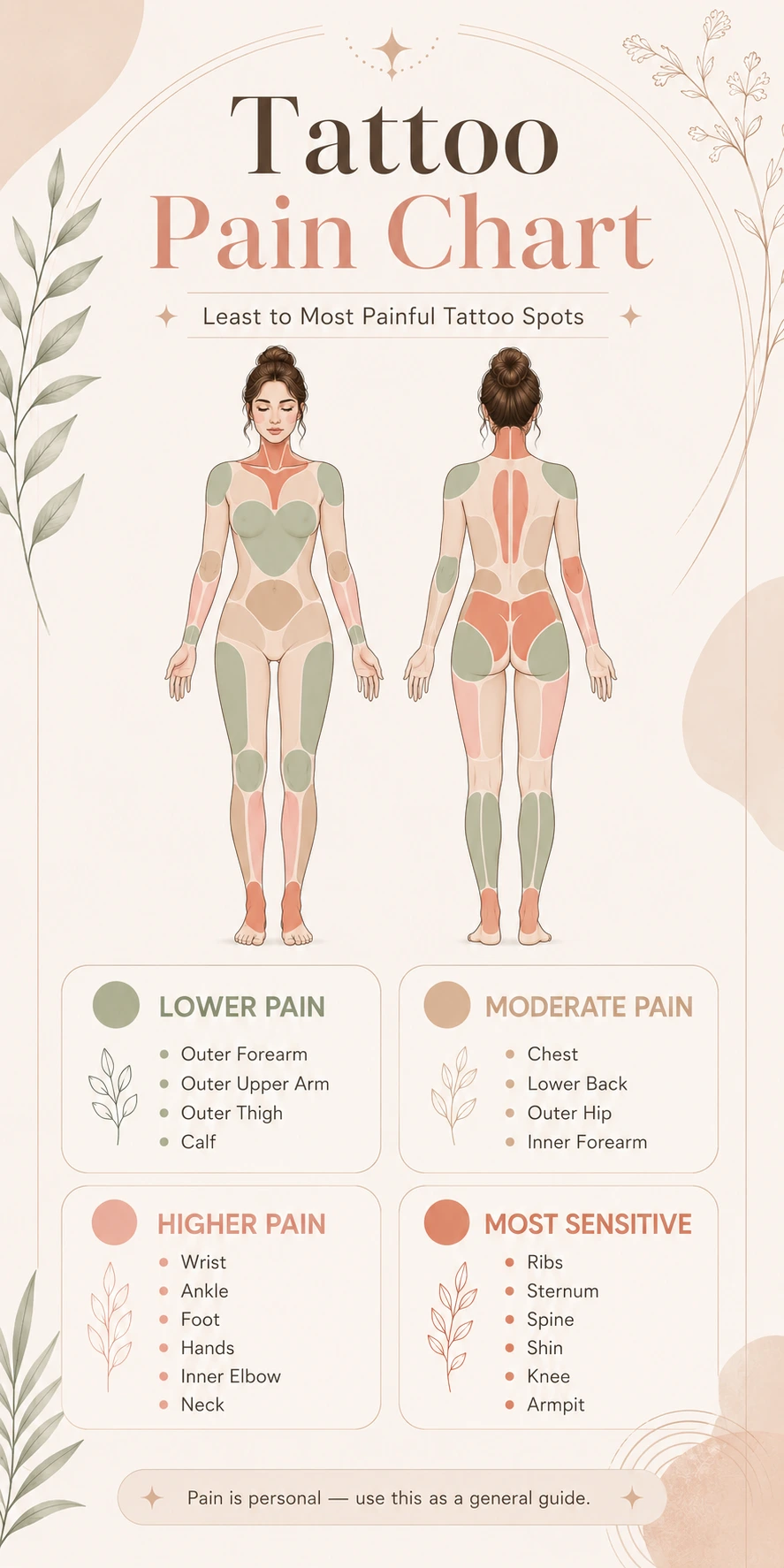
How to read this tattoo pain chart
You’ll find dozens of tattoo pain charts online, and many slap a tidy number on each body part, like “7 out of 10.” Those numbers look reassuring, but they’re mostly based on surveys and personal opinion, not clinical measurement.
That’s why this guide uses relative wording instead: lower, moderate, higher, and most sensitive. These ranges reflect the general consensus among medical and tattoo-industry sources about where tattoos tend to hurt more or less. They’re a starting point for planning, not a score you’ll feel guaranteed to match.
Your own experience depends on your pain tolerance, the design, the artist, and even how you feel that day. Two people can get the same wrist tattoo and describe completely different sensations.
What makes a tattoo hurt more or less?
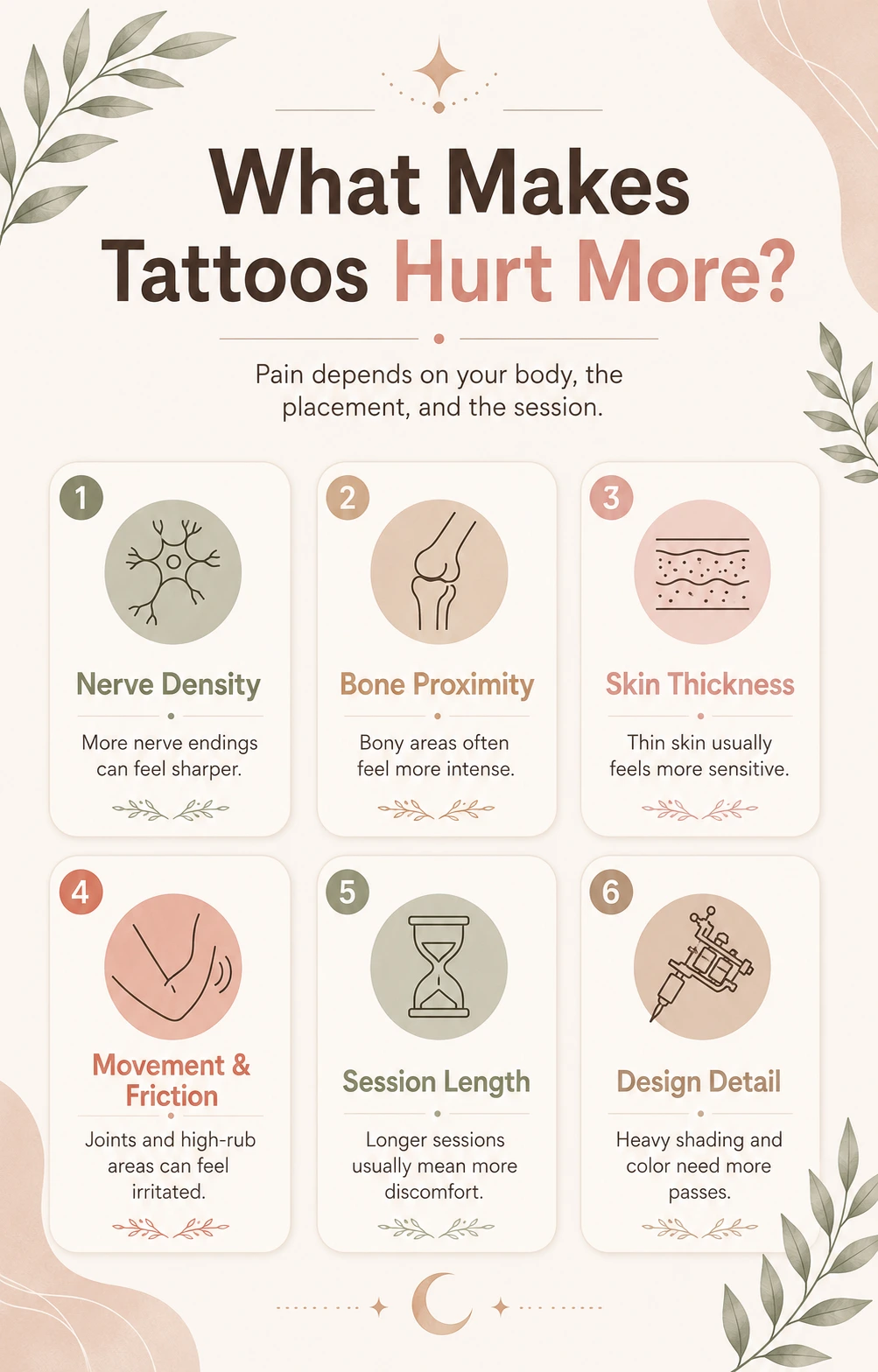
Tattooing works by repeatedly puncturing the top layers of your skin with a needle to deposit ink. Whether that feels mild or intense comes down to a handful of factors — some about your body, some about the tattoo itself.
Nerve density
Skin with more nerve endings sends more pain signals. Areas packed with nerves, like the fingers, hands, feet, and inner arm, tend to feel sharper and more sensitive than fleshier spots.
Bone proximity
When there’s little fat or muscle between your skin and the bone underneath, the vibration of the tattoo machine has nowhere to absorb. Bony areas such as the ribs, spine, ankles, shins, and collarbone are commonly described as some of the more uncomfortable places to get tattooed.
Skin thickness and padding
Thicker skin with a cushion of fat or muscle generally offers more protection and a duller sensation. Thin skin with little underneath — like the inner wrist or the top of the foot — usually feels more intense.
Movement and friction
Placements that flex, stretch, or rub constantly — fingers, feet, elbows, and the ribs as you breathe — can feel more irritating during the session and may be more tender afterward.
Session duration
The longer you’re in the chair, the more your body has to tolerate. Research on tattoo pain has found that time spent tattooing is one of the strongest factors in how much pain people report.1 A tiny minimalist design is over quickly; a detailed or heavily shaded piece keeps the needle on your skin much longer.
Artist technique and the type of work
Line work, shading, and color packing don’t all feel the same. Bold fills and dense shading require more passes over the same skin, which many people find more tiring than a quick fine-line outline. An experienced artist’s hand and pacing can also make a noticeable difference.
Size, detail, and complexity
A small, simple design means less time and less total trauma to the skin. Larger or more intricate pieces add up, both in session length and in how much your skin has to take.
Your individual tolerance and state
Pain perception varies from person to person, and stress plays a real role — studies on tattoo pain have linked higher stress levels to more pain during the session.1 Showing up rested, fed, calm, and well-hydrated is widely recommended by professional artists to help you stay comfortable. Try to avoid alcohol beforehand; reputable studios generally won’t tattoo anyone who has been drinking.
What does tattoo pain actually feel like?
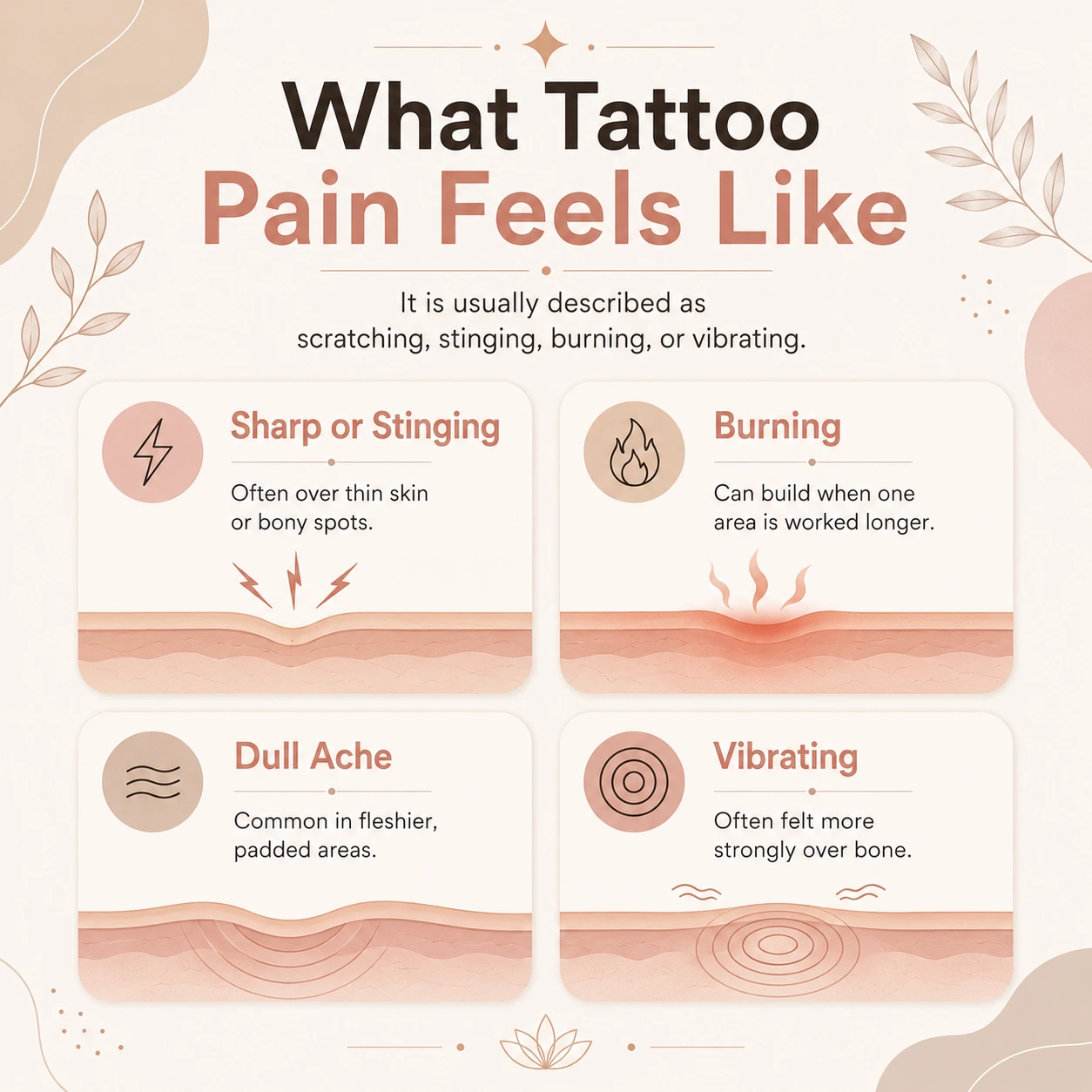
Tattoo pain isn’t one single sensation. Knowing the different types can make the experience feel far less mysterious.
- Sharp or stinging: Often felt during fine line work or over thin skin and bony areas. Many people describe it as a hot scratch.
- Burning: A warm, raw feeling that can build up when the artist works the same area for a while.
- Dull or background ache: A steady, tolerable sensation common in fleshier areas once you settle in.
- Vibrating or scratching: Felt most over bone, where the machine’s buzz seems to travel.
Sensations usually feel softer over padded areas and more pronounced over bone or nerve-dense skin.
Tattoo pain chart by body area: lower to most sensitive
Here’s the general picture, organized from areas that tend to hurt less to the most sensitive spots. Remember, these are relative tendencies reported across medical and industry sources — your mileage will vary.2
Generally lower-pain areas
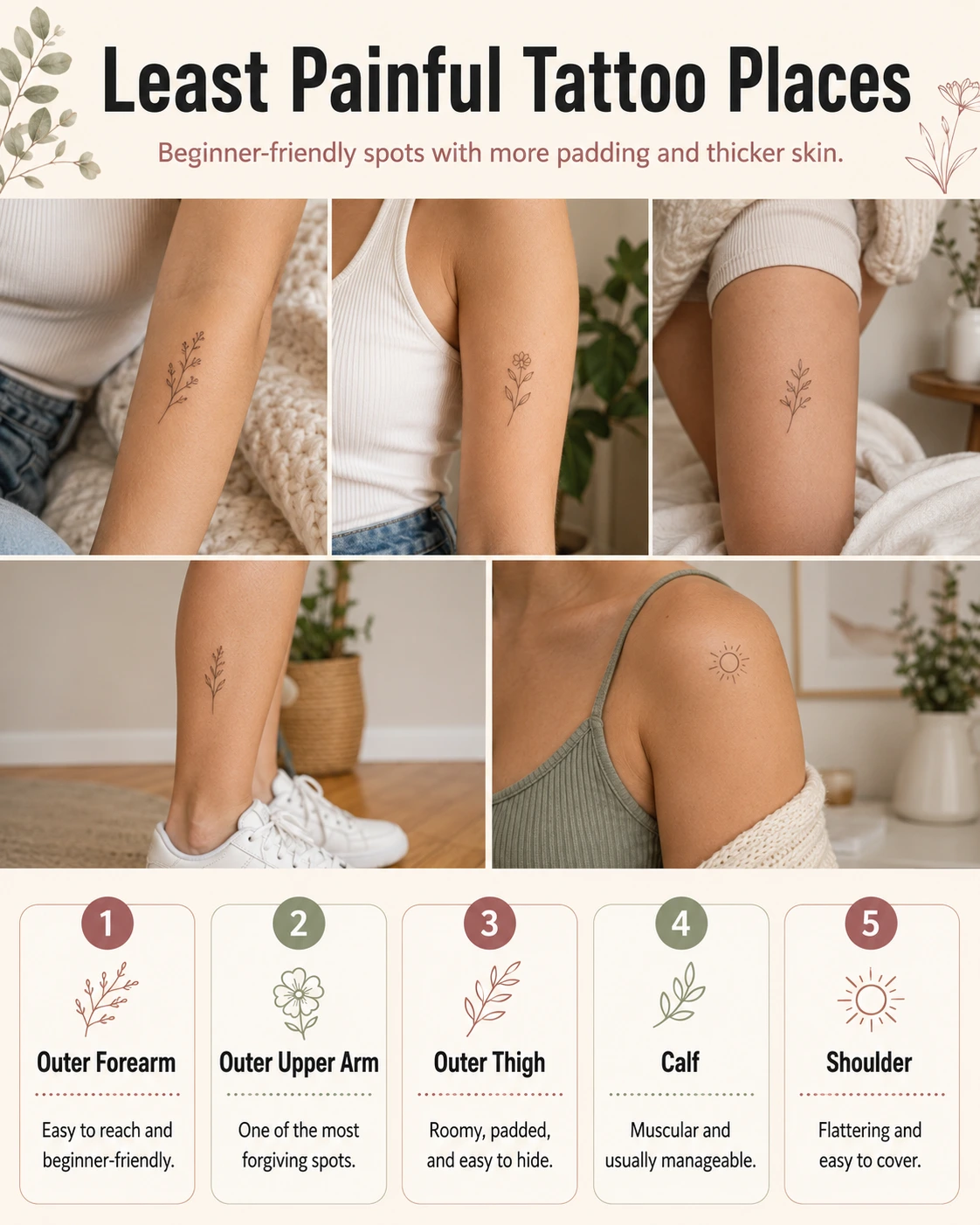
These spots usually have more muscle or fat, thicker skin, and fewer nerve endings, so they’re popular for first and small tattoos.
- Outer upper arm and shoulder: Often cited as one of the most forgiving and flattering placements. Great for a first tattoo and easy to show off or cover.
- Outer forearm: Fleshy, easy to reach, and ideal for small script or minimalist designs.
- Outer thigh: Plenty of padding and few nerve endings; roomy for small or medium pieces.
- Calf: Muscular and generally comfortable, with good space for delicate work.
- Upper back and shoulder blade: Broad and relatively cushioned, though it can get more sensitive closer to the spine.
Moderate-pain areas
Comfortable for many people, but a little more noticeable depending on exactly where the design sits.
- Chest, fleshy areas: Can be moderate away from the collarbone and sternum, more sensitive as you near the bone.
- Lower back: Manageable for many, with more tenderness near the spine.
- Hip and outer hip: Often moderate, though it can get sharper over the hip bone.
- Inner forearm: Slightly more sensitive than the outer forearm because the skin is thinner.
- Bicep: Generally tolerable thanks to muscle, with the inner side feeling more tender.
Higher-pain areas
Thinner skin, more nerves, or frequent movement make these spots more intense for most people.
- Wrist: Popular for tiny tattoos, but the thin skin and nearby bone make it more sensitive.
- Ankle and foot: Little padding over bone, plus constant movement, tends to make these sharper.
- Fingers and hands: Nerve-dense and bony, and they also fade faster, so they ask more of you in every way.
- Inner elbow, or elbow ditch: Thin, sensitive skin over a joint that bends constantly.
- Behind the ear and the neck: Delicate skin close to bone; small designs are common here but can feel intense.
Most sensitive areas
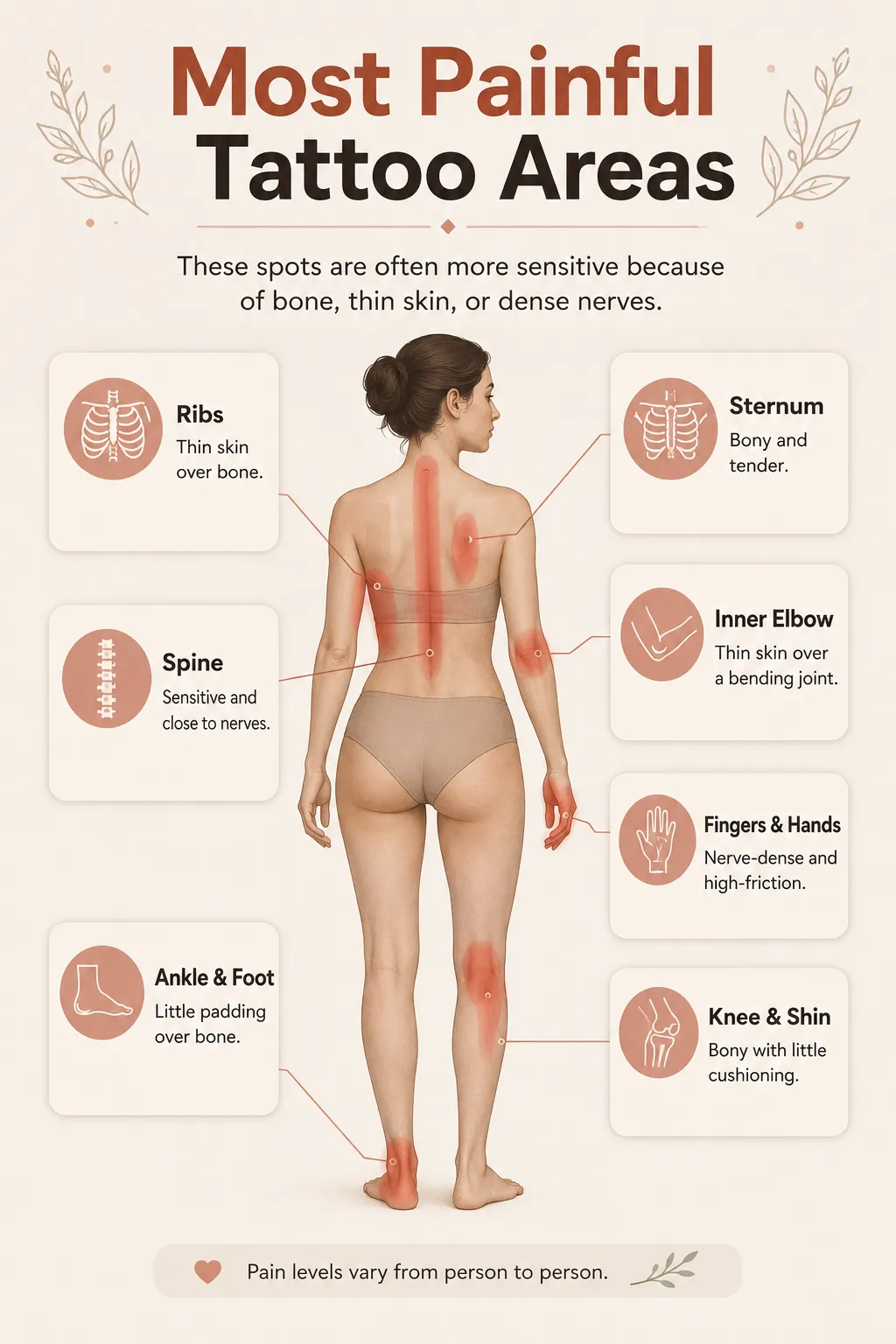
These sit over bone or thin, nerve-rich skin and are widely reported as the toughest. They’re usually chosen for larger statement pieces rather than tiny first tattoos.
- Ribs: Thin skin over bone that moves every time you breathe — frequently named one of the most sensitive spots.
- Sternum and chest center: Bony and tender.
- Spine: Directly over bone with nerves running close to the surface.
- Stomach: Soft and sensitive, and it reacts to every breath.
- Kneecap and behind the knee: Bone on one side, nerve-rich and stretchy skin on the other.
- Shin: Very little padding over bone.
- Armpit, groin, and inner thigh: Dense nerve endings make these especially intense.
Best low-pain placements for a first or small tattoo
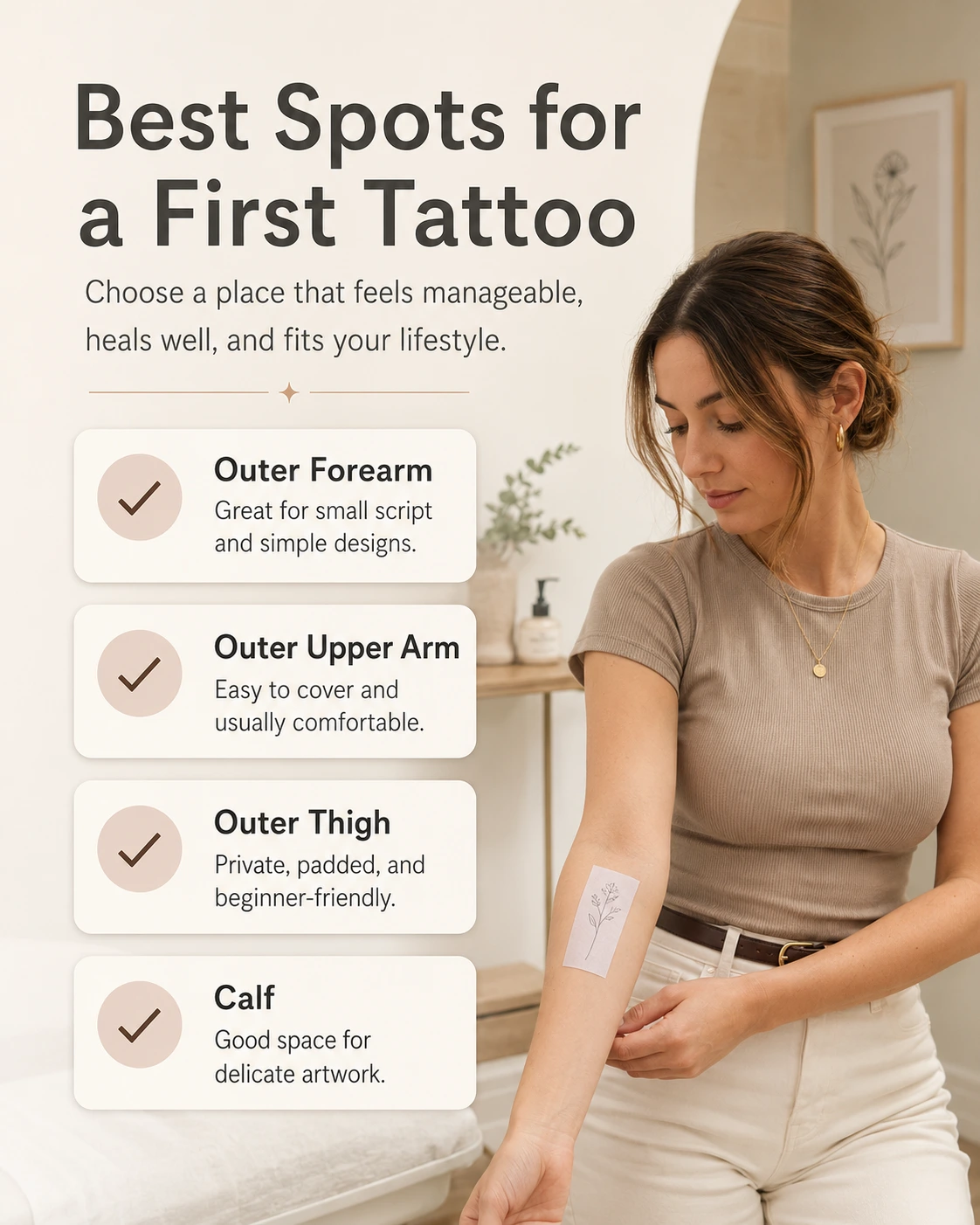
If this is your first tattoo and you want to keep things gentle, lean toward fleshier, lower-movement areas with thicker skin. The outer forearm, outer upper arm or shoulder, outer thigh, and calf are reliable choices. They’re comfortable, they heal conveniently, and they suit the kind of small, fine-line designs our readers love.
They also give you control over visibility. An outer-arm tattoo is easy to show off or cover for work, while a thigh placement stays private unless you choose to reveal it. If you are still choosing a placement, start with a lower-pain area like the outer forearm, outer upper arm, outer thigh, or calf, then ask your artist how your specific design will sit and heal on that spot.
How to choose the right placement for you
Choosing where to put your tattoo is a balance of comfort, design, and lifestyle. Run through these questions before you book.
- How much sensation am I comfortable with? If you’re nervous, start with a lower-pain area like the outer forearm or outer thigh.
- How big and detailed is the design? Small, simple pieces fit almost anywhere, while intricate work needs flatter, roomier skin and a longer, more demanding session.
- How visible do I want it? Decide whether you want a tattoo you can show off daily or one you can easily cover for work or events.
- How will the spot age? High-friction areas like fingers, hands, and feet tend to fade faster and may need touch-ups, so factor upkeep into your choice.
- Does the area move a lot? Joints and frequently flexed skin can feel more irritating during the session and while it heals.
If you’re torn, talk it through with your artist. They place tattoos every day and can tell you how a specific design will sit, stretch, and heal on the spot you’re considering.
Does size, style, or color change the pain?
Yes, though maybe less dramatically than you’d expect.
- Size and detail: Smaller, simpler designs mean shorter sessions and less overall discomfort. This is one reason tiny tattoos are such a friendly entry point.
- Line work vs. shading and fill: A quick outline is often easier to sit through than dense shading or solid color packing, which require repeated passes over the same skin.
- Color vs. black: Color work can mean more time layering pigment, and more time generally means more sensation — but placement still matters most.
If you’re drawn to delicate styles, a small fine-line design in a lower-pain spot is about as gentle as tattoos get. If you are planning a small or meaningful tattoo, delicate symbols, floral designs, short script, and minimalist fine-line tattoos usually pair well with lower-pain placements like the outer forearm, outer upper arm, outer thigh, and calf.
What to expect during your tattoo session
Knowing the rhythm of a session takes a lot of the fear out of it.
Your artist will start by cleaning the area and applying a stencil so you can confirm placement and sizing. The first few seconds of the needle are usually the most surprising; most people find the sensation settles into something more predictable once they relax.
For a small tattoo, the actual tattooing is often shorter than the prep and aftercare conversation combined. Outlining usually comes first, followed by any shading or color, and you may feel the sensation shift as the artist switches techniques.
Breaks are normal, especially for longer or more detailed pieces. If you feel lightheaded, too warm, or simply need a moment, say so. When the tattoo is finished, your artist will clean it, bandage it, and walk you through aftercare.
How to make your tattoo hurt less
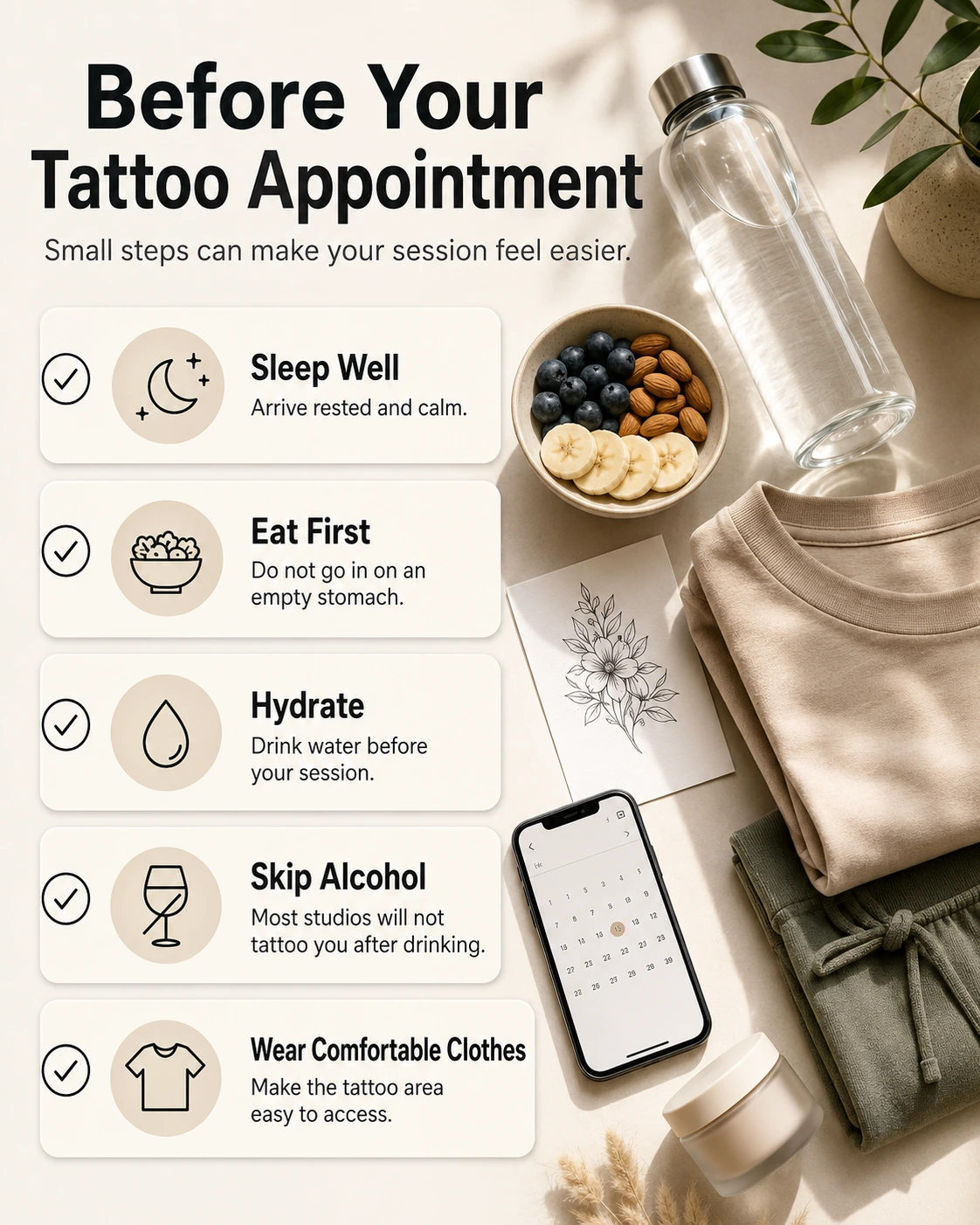
You can’t change where nerves and bones sit, but you can stack the odds in your favor.
Before your appointment
- Sleep well and eat a real meal beforehand so you’re not running on empty.
- Hydrate in the days leading up to your session.
- Skip alcohol before you go; most studios won’t tattoo you if you’ve been drinking.
- Wear comfortable clothing that gives the artist easy access to the area.
About numbing creams
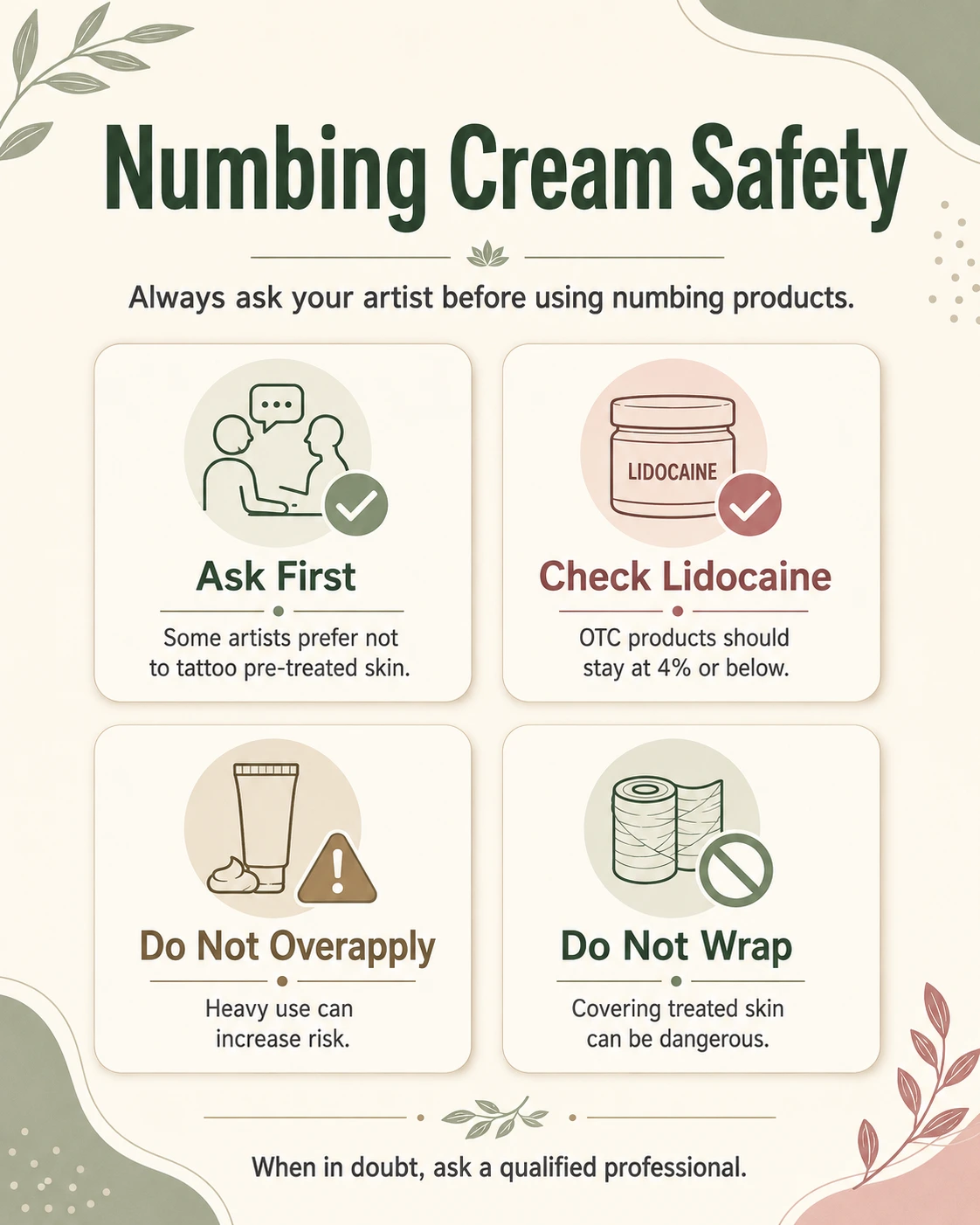
Numbing creams can take the edge off, but use them carefully and talk to your artist first — some prefer not to work over pre-treated skin because it can change the skin’s texture.
If you do consider one, follow safety guidance from the U.S. Food and Drug Administration. The FDA warns consumers not to use over-the-counter topical pain products containing more than 4% lidocaine, not to apply them heavily over large areas or onto broken skin, and not to wrap or cover treated skin, because doing so can increase the risk of dangerous side effects.3 When in doubt, ask your artist and a qualified healthcare professional what’s appropriate for you.
During the session
- Breathe steadily instead of holding your breath.
- Speak up if you need a short break; a good artist expects it.
- Stay as relaxed as you can, since tension can make everything feel sharper.
Common mistakes first-timers make about tattoo pain
A few avoidable missteps make tattoos hurt more than they need to. Watch out for these.
- Treating a pain chart as a promise. Charts show tendencies, not guarantees. Your tolerance and the day’s circumstances can shift the experience either way.
- Choosing a placement only for looks. A spot might photograph beautifully but sit over bone or a high-movement joint. Balance how it looks with comfort and how easily it heals.
- Booking a long, detailed first piece. Starting small keeps your first session short and far more manageable, and you can always add more later.
- Arriving depleted. Skipping food and sleep makes it harder to sit comfortably. A real meal and a good night’s rest go a long way.
- Relying on numbing cream without asking. Some artists won’t work over treated skin, and misusing these products carries real safety risks. Always ask first.
- Tensing up. Holding your breath and bracing can make every pass feel sharper. Slow, steady breathing helps more than people expect.
Tattoo pain vs. healing discomfort
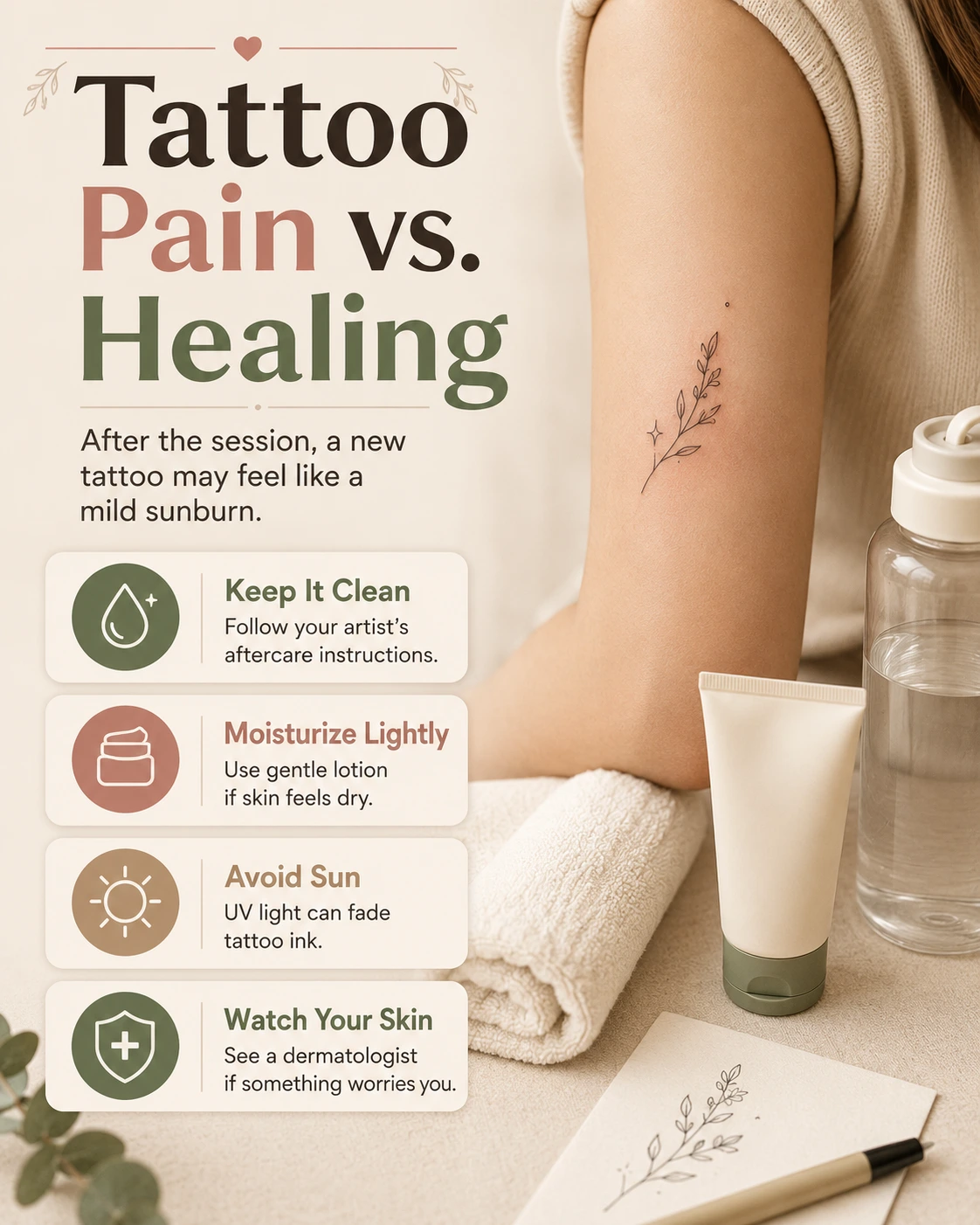
The pain you feel in the chair is different from how your tattoo feels while it heals. In the days afterward, a new tattoo often feels like a mild sunburn — tender, warm, and a little tight — before it settles down.
Proper aftercare keeps that discomfort manageable and protects your design. Dermatologists generally recommend keeping the area clean, applying a water-based lotion if the skin feels dry, and protecting healed tattoos from the sun with a broad-spectrum SPF, since UV light can fade ink.4 If you ever notice signs of a skin reaction or your tattooed skin changes in a way that worries you, see a board-certified dermatologist.4
A simple routine works best: keep the tattoo clean, moisturize lightly if the skin feels dry, avoid picking or scratching, and protect healed ink from direct sun. For a step-by-step routine after your appointment, read our tattoo aftercare and healing guide.
Note: This article provides general educational information and is not a substitute for advice from a licensed tattoo artist or qualified healthcare professional.
Frequently asked questions
What’s the least painful place to get a first tattoo?
Fleshier, thicker-skinned areas like the outer forearm, outer upper arm or shoulder, and outer thigh are generally the most comfortable. They also suit small, simple designs and heal conveniently.
Where do tattoos hurt the most?
Areas over bone or with thin, nerve-dense skin tend to be the most sensitive — commonly the ribs, sternum, spine, ankles, feet, fingers, and the inner elbow. Pain is still personal, so these are tendencies, not certainties.
Do small tattoos hurt less than large ones?
Usually, yes — mostly because they’re faster. A shorter session means less total time your skin spends under the needle, and session length is one of the biggest pain factors.
Does a tattoo pain chart apply to everyone?
No. Charts show general tendencies based on anatomy and shared experience, but your tolerance, the design, and your artist all shape how it feels. Treat any chart as a planning tool, not a promise.
Do numbing creams actually work for tattoos?
They can reduce sensation for some people, but results vary and not all artists allow them. If you use one, follow FDA safety guidance and stay at or below 4% lidocaine for over-the-counter products, and never wrap the treated skin.3
Will my tattoo keep hurting after I leave the studio?
A new tattoo usually feels tender, like a mild sunburn, for a few days. Following your artist’s aftercare instructions helps keep that comfortable.
Final takeaway
The two things you control most — placement and preparation — also make the biggest difference in comfort. Choose a spot that fits your design, your daily life, and how much sensation you’re comfortable with, then show up rested and calm. Do that, and a small tattoo is far more manageable than most first-timers expect.
Sources & references
- Gender Differences in Subjective Pain Perception during and after Tattooing — National Library of Medicine (PMC): https://pmc.ncbi.nlm.nih.gov/articles/PMC7767267/
- Tattoo Pain Chart: Pain Level by Location and Why — Healthline: https://www.healthline.com/health/body-modification/pain-tattoos-chart
- FDA Warns Consumers to Avoid Certain Topical Pain Relief Products — U.S. Food and Drug Administration: https://www.fda.gov/news-events/press-announcements/fda-warns-consumers-avoid-certain-topical-pain-relief-products-due-potential-dangerous-health
- Caring for tattooed skin — American Academy of Dermatology: https://www.aad.org/public/everyday-care/skin-care-basics/tattoos/caring-for-tattooed-skin